Private Label Skincare Guide
Private Label Skincare Manufacturer for Europe and USA: Building Vitamin C Serum and Body Care Lines
This guide explains how European and American beauty brands can plan a practical skincare line with a private label skincare manufacturer, without making the process feel overly technical or too sales-driven.
Choosing a private label skincare manufacturer for Europe and USA is not only about finding a factory with attractive samples. Buyers in these markets usually care about product feel, ingredient story, packaging presentation, compliance-safe claims, stable communication, and a supply chain that can support repeat orders after launch.
For many beauty brands, the first product discussion starts with familiar categories such as vitamin C serum, body scrub, body lotion, or a small routine set. These products are easy for consumers to understand, but they still need serious B2B planning.
This guide explains how European and American beauty brands can plan a practical skincare line with a private label skincare manufacturer, without making the process feel overly technical or too sales-driven.
Why Europe and USA Buyers Need a More Structured Private Label Skincare Manufacturer
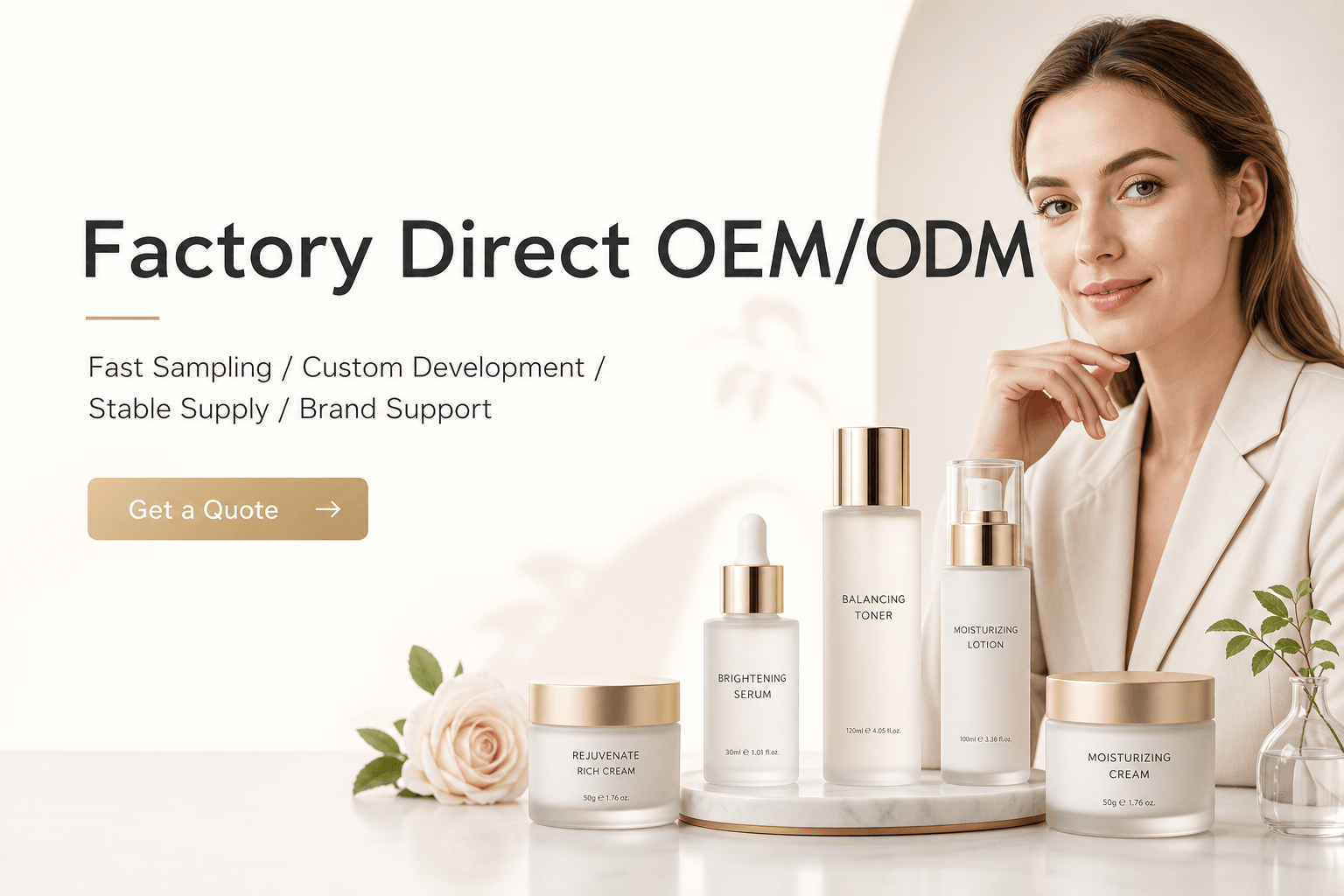
The European and American skincare markets are mature, competitive, and highly detail-oriented. Retail buyers, e-commerce customers, salon partners, and distributors often compare products by texture, ingredient direction, packaging quality, claim wording, and brand story. A product that looks acceptable in a catalog may still feel too generic once it enters a crowded market.
That is why a private label skincare manufacturer should do more than offer a price list. For EU and US projects, the supplier should understand how to discuss product positioning, target customer, order quantity, packaging route, sample revisions, and export documentation in a clear way.
A strong factory partner can help answer practical questions such as:
- Should the brand start with one hero product or a small routine set?
- Does the formula direction fit e-commerce, salon retail, spa, Amazon, or distributor channels?
- Is the texture suitable for humid, dry, or seasonal markets?
- Can the packaging support both brand image and production efficiency?
- Are the claims written as cosmetic support language rather than overpromising results?
These decisions are what separate a repeatable private label project from a one-time sample order.
Start With a Focused Product Line, Not Too Many Random SKUs
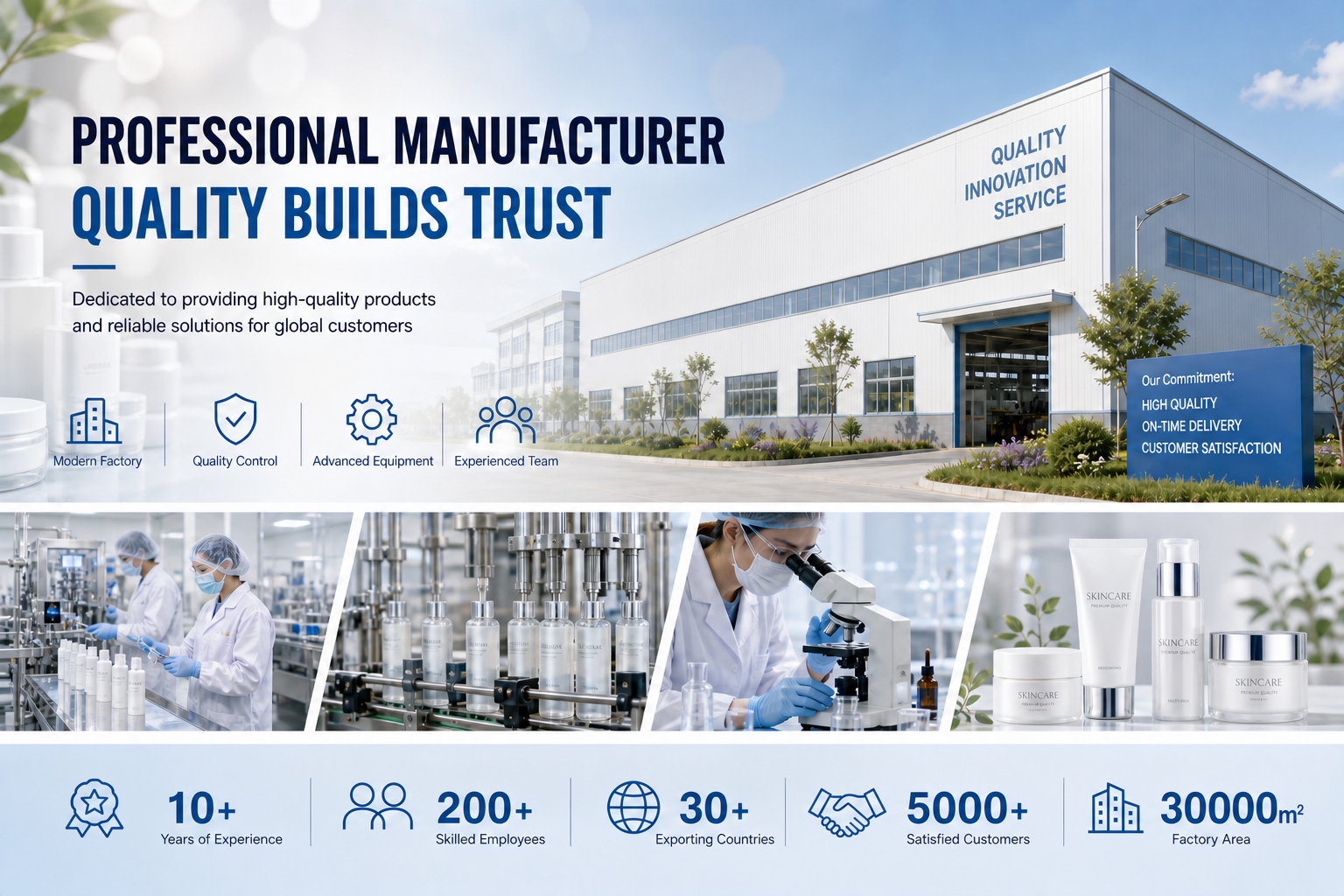
New skincare brands often want to launch many products at once. In reality, a tighter product line is usually easier to manage, especially for first orders. For Europe and USA buyers, a focused launch can reduce inventory pressure, simplify marketing, and make customer education more consistent.
A practical starting range may include:
- One facial hero product, such as vitamin C serum
- One daily moisturizing product, such as face cream or body lotion
- One sensory body care product, such as body scrub
- One bundle or set concept for gift, salon, or e-commerce selling
This approach gives the brand enough variety without making the development brief too scattered. It also allows the manufacturer to coordinate textures, packaging colors, label style, and product positioning across the line.
For B2B buyers, the key question is not “How many formulas can the factory provide?” The better question is “Which formulas fit my market, price point, channel, and launch stage?”
Vitamin C Serum Private Label: Check Stability, Texture, and Packaging Fit

Vitamin C serum is a familiar category for European and American consumers. It can work well as a hero facial product because it has strong search interest, clear routine value, and easy pairing with cleanser, toner, moisturizer, sunscreen, or a complete facial kit.
However, vitamin C serum private label projects need careful evaluation. Buyers should ask about formula direction, texture, color, fragrance level, packaging format, and how the product should be positioned in a daily skincare routine. The final product should feel credible, not like a generic serum with a bright label.
Important points to review include:
- Lightweight or richer serum texture
- Dropper, pump, or airless bottle suitability
- Compatibility between formula and packaging
- Ingredient story and claim wording
- Sample feedback and revision process
- MOQ for standard and customized packaging
For EU and US brands, the product page and outer packaging should avoid absolute promises. Safer wording can focus on helping improve the look of dull skin, supporting a more radiant-looking complexion, and fitting into a daily skincare routine. The final language should always match the formula and the target market’s cosmetic requirements.
Body Scrub for Western Markets: Make the Sensory Experience Clear
Body scrub can be a strong category for brands that want a more sensory product. It works well for bath and body lines, spa-style retail, gift sets, and e-commerce bundles. For Europe and USA buyers, the scrub experience must feel intentional: not too rough, not too oily, not too hard to rinse, and not disconnected from the rest of the product line.
When developing a private label body scrub, buyers should define the exfoliation level before focusing on fragrance or label design. A gentle scrub may suit regular body care routines, while a stronger scrub may fit spa-style positioning. The wrong exfoliation feel can create poor customer reviews even if the product looks attractive online.
A professional OEM ODM skincare factory should help review:
- Exfoliating particle type, size, and skin feel
- Creamy, gel, oil-based, or rinse-off base texture
- Fragrance direction and intensity
- Jar size, lid seal, and label material
- Separation risk during storage and shipping
- How the scrub pairs with body lotion or body cream
For Western brands, body scrub also needs a clear use occasion. Is it for weekly exfoliation, pre-lotion body care, shower routine support, or a spa-inspired bundle? Once the use case is clear, the formula and packaging decisions become much easier.
Body Lotion and Body Care: Match Texture to Climate and Channel

Body lotion is a high-repeat category, but it is also easy to underestimate. A lotion that feels comfortable in one market may feel too heavy, sticky, or light in another. For Europe and USA buyers, texture testing should be done with the real customer and climate in mind.
For example, a lightweight fast-absorbing lotion may fit summer, daily use, or mass e-commerce positioning. A richer lotion-cream may fit dry climates, winter care, premium body care, or spa retail. A fragrance-forward lotion may work for bath and body lines, while a lower-fragrance version may suit sensitive-positioned products.
Before confirming a body lotion formula, buyers should test:
- Spreadability over larger body areas
- Absorption speed after application
- Stickiness after five to ten minutes
- Skin feel under clothing
- Fragrance strength and after-feel
- Pump, tube, or bottle compatibility
- Cost structure for different package sizes
A reliable private label cosmetics manufacturer should be able to explain how formula texture, packaging, MOQ, and market positioning connect. If the supplier only sends random lotion samples without asking about channel or price point, the project may lack direction.
OEM ODM Skincare Support: When to Choose Ready Formula or Custom Development
Many Europe and USA buyers use the terms private label, OEM, and ODM interchangeably, but the project path can be different.
Private label is usually the fastest route when the buyer wants to launch with an existing or semi-ready formula under their own branding. This can be suitable for first launches, market testing, or lower-risk product extensions.
ODM is better when the buyer needs more adjustment in texture, fragrance, packaging combination, ingredient story, or product positioning. For example, a brand may want a vitamin C serum with a specific sensory profile, a coconut-inspired body scrub with a softer exfoliation feel, or a body lotion line designed for a particular climate.
OEM support is often more relevant when the buyer already has a clearer formula concept, packaging direction, or development brief. In that case, the manufacturer’s role is to turn the brief into scalable production while managing sample confirmation and order details.
The best route depends on timeline, budget, target market, and how much differentiation the brand needs.
Compliance-Safe Claims Matter More in Europe and USA
Skincare marketing in Europe and USA must be attractive, but it also needs to stay responsible. For cosmetic products, buyers should avoid claim language that sounds like medical treatment, absolute visible change, or long-term corrective results. This is especially important for brightening, anti-aging, exfoliating, and repair-positioned products.
A safer claim direction may include wording such as:
- Helps skin feel smoother and more moisturized
- Supports a brighter-looking complexion
- Leaves skin feeling soft after exfoliation
- Designed for daily body care routines
- Helps improve the appearance of dull-looking skin
- Supports a more even-looking skin tone
The wording should be based on the formula, product testing, and target market rules. A serious private label skincare manufacturer should help buyers keep claims commercially useful without pushing language that creates avoidable compliance risk.
What to Ask Before Requesting Samples From a Skincare OEM Factory
Before asking for samples, prepare a short but clear product brief. This saves time and helps the manufacturer recommend formulas that actually match your project.
Your brief should include:
- Target market: Europe, USA, or specific country
- Sales channel: e-commerce, distributor, salon, spa, retail, or wholesale
- Product category: vitamin C serum, body scrub, body lotion, facial kit, or full line
- Texture preference: lightweight, rich, creamy, gel-like, fast-absorbing, or rinse-off
- Packaging direction: bottle, jar, tube, pump, airless, carton, or set box
- Positioning: entry-level, mid-market, premium, natural-inspired, spa-style, or clinical-look cosmetics
- MOQ expectation and launch timeline
- Required documents, artwork support, or export needs
A good supplier will ask follow-up questions instead of pushing one standard sample. That conversation is often the first sign of whether the factory can support a long-term B2B relationship.
Why CrownDiaBio Fits Private Label Skincare Projects for Western Brands
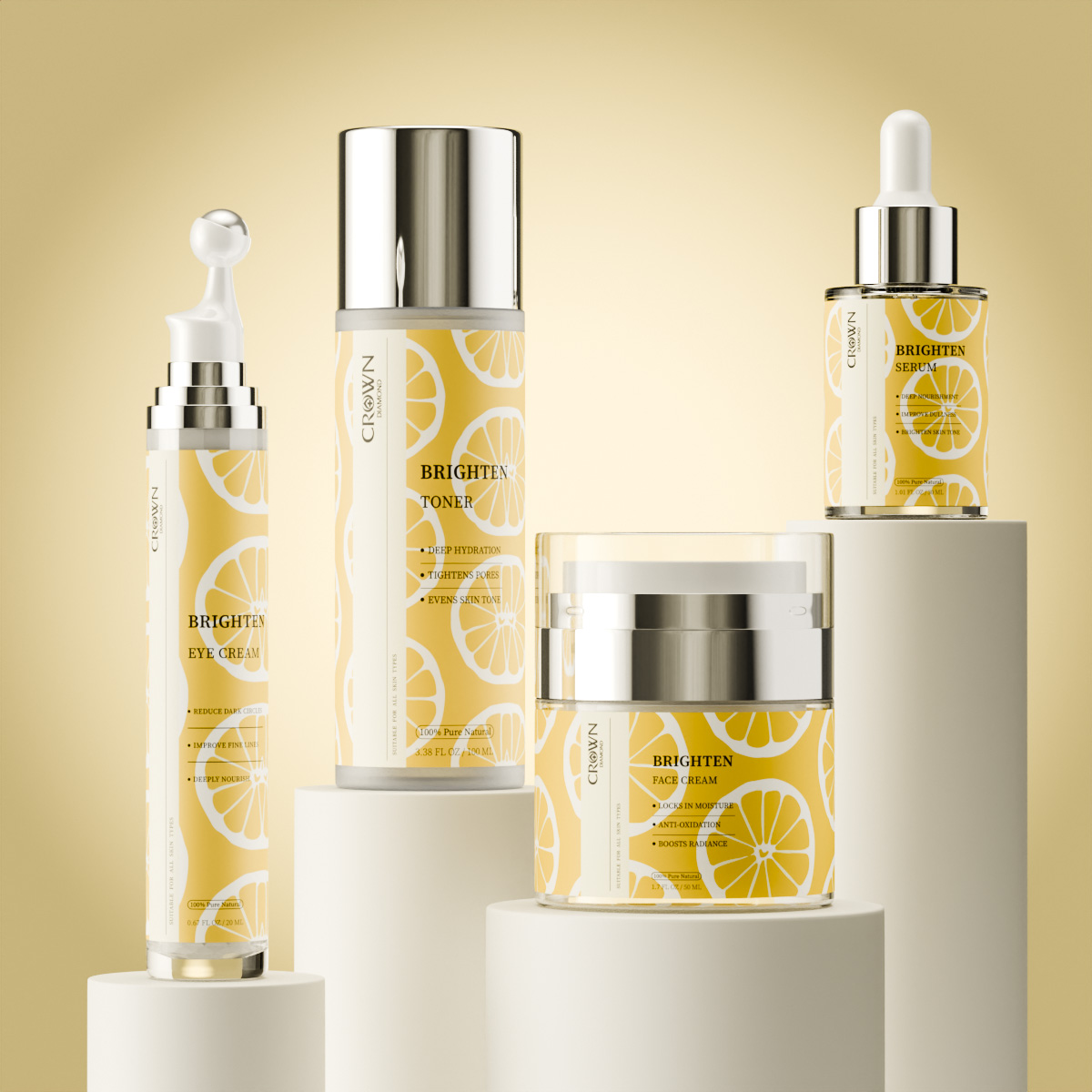
CrownDiaBio is a Guangzhou-based skincare OEM/ODM and private label manufacturer with more than 20 years of experience. The company supports private label, OEM, ODM, custom formulation, packaging coordination, and sample development for facial care and body care products.
For buyers planning vitamin C serum, body scrub, body lotion, facial kits, or broader skincare lines, CrownDiaBio can help turn a product idea into a practical manufacturing brief. With around 300+ formula options, MOQ support from 100 units, monthly capacity up to 660,000 units, and manufacturing support including GMP, ISO 22716, and SGS-related documentation, the team is positioned for B2B buyers who need both flexibility and repeat-order capability.
If you are building a skincare line for Europe or USA, send your product brief through the CrownDiaBio contact page and ask for sample recommendations based on your target market, channel, texture preference, and packaging direction.
FAQ: Private Label Skincare Manufacturer for Europe and USA
What products should a new skincare brand start with?
Many brands start with one hero product and one or two supporting products. Vitamin C serum, body lotion, body scrub, facial cream, cleanser, or a small routine set can be practical starting points, depending on the target channel and budget.
Is private label faster than ODM skincare development?
Usually, yes. Private label uses existing or semi-ready formulas, so sampling and launch planning can be faster. ODM is better when the brand needs more customization in texture, fragrance, packaging, or product positioning.
Can one manufacturer support both facial care and body care products?
Yes, if the manufacturer has a broad formula base and production experience across categories. This is useful for brands that want to expand from vitamin C serum into body lotion, body scrub, facial kits, or full skincare sets.
What should Europe and USA buyers check before bulk orders?
Buyers should check formula positioning, sample texture, packaging compatibility, MOQ, lead time, claim wording, export support, and whether the supplier can manage repeat production clearly.
How can I make skincare claims safer for Western markets?
Use cosmetic-style language such as “helps,” “supports,” “improves the appearance of,” and “leaves skin feeling.” Avoid absolute promises, treatment-style wording, or claims that are not supported by the final formula.
Focused on driving B2B inquiries for OEM/ODM partners.
SEO Self-Check
- Word count: 1991
- Primary keyword density: 1.41%
- Core keyword placement: H1, introduction, H2, body, FAQ
- LSI terms used naturally: OEM ODM skincare, private label cosmetics manufacturer, skincare OEM factory, vitamin C serum private label, body scrub, body lotion, body care line, Europe and USA skincare brands
- CTA: Clear contact-page CTA for sample recommendations and OEM/ODM discussion
- CTR direction: Medium-high; the title combines manufacturer intent with Europe/USA targeting and recognizable product categories.
Final Thoughts
For Europe and USA skincare buyers, the right manufacturing partner should support more than simple product filling. The real value is in product-line focus, clearer sampling, safer claim direction, packaging fit, and a smoother path from idea to repeat order.
If you are building a vitamin C serum, body scrub, body lotion, or broader skincare line for Western markets, start with a clear brief and compare how each manufacturer handles texture, MOQ, communication, and production planning.
Contact CrownDiaBio to discuss your Europe or USA skincare project and request sample recommendations based on your target market, channel, texture preference, and packaging direction.