USA Private Label Skincare Guide
Private Label Anti-Aging Skincare Set for USA: How Beauty Brands Can Launch a 4PCS Peptide Vitamin C Retinol Routine
This guide explains how US beauty brands can evaluate and position a private label anti-aging skincare set for launch, while keeping product planning, channel fit, and compliance-safe claims in focus.
For many US beauty brands, a private label anti-aging skincare set is easier to market than a single stand-alone product. Instead of asking customers to guess how different products work together, a set gives a ready-made routine with clearer positioning, higher perceived value, and stronger bundling potential for e-commerce, spa retail, and salon channels.
One practical example is this [Own Brand 4PCS Facial Peptide Vitamin C Retinol Set](https://www.crowndiabio.com/product/own-brand-4pcs-facial-peptide-vitamin-c-retinol-set/). For American skincare buyers, the appeal is not only the ingredient list. The bigger advantage is that peptide, vitamin C, and retinol can be positioned as a complete anti-aging routine with a simple story that is easier to sell online and easier to explain in wholesale conversations.
This guide explains how US beauty brands can evaluate and position a private label anti-aging skincare set for launch, while keeping product planning, channel fit, and compliance-safe claims in focus.
Why a 4PCS Anti-Aging Set Fits the US Market
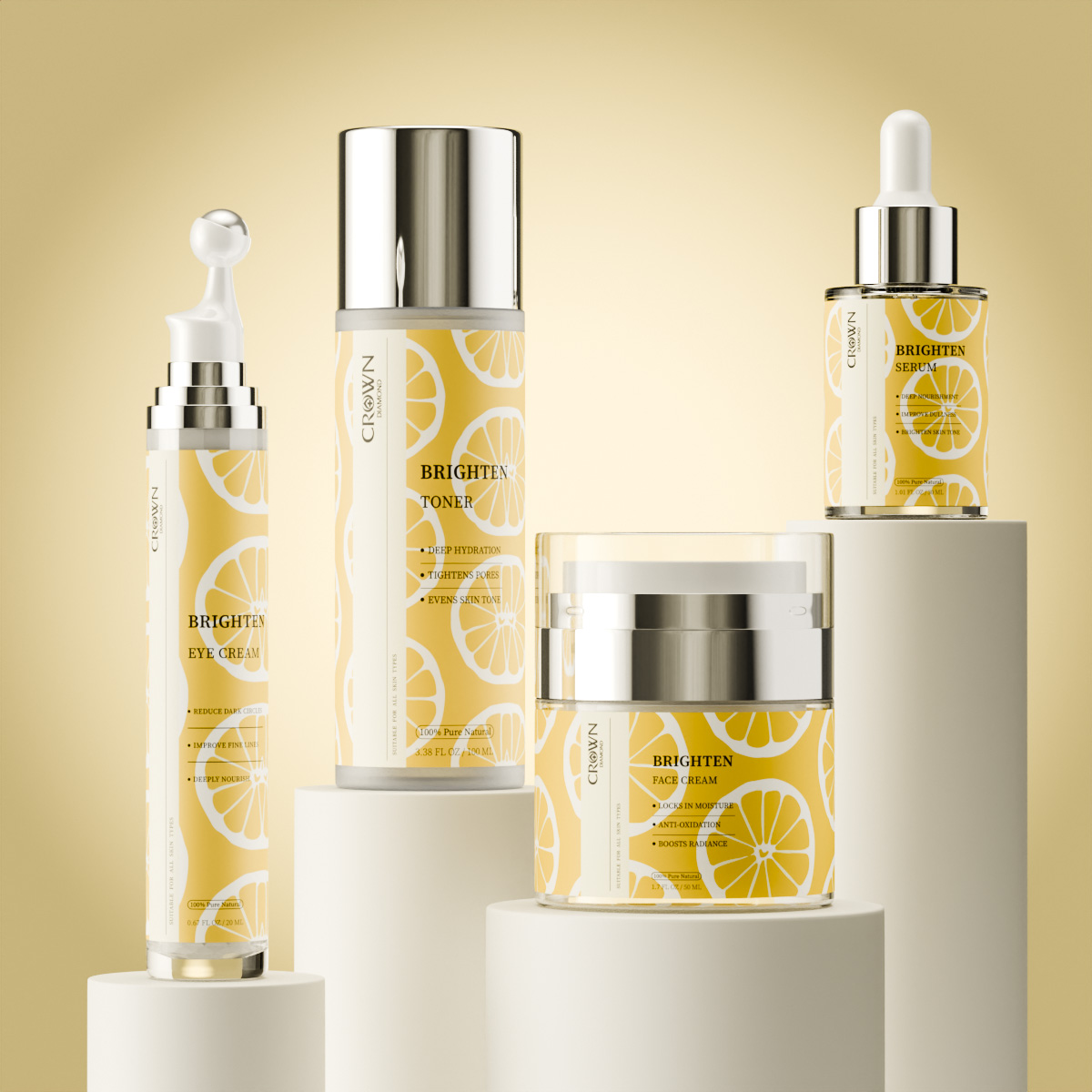
The US skincare market is highly competitive, but it also responds well to routine-based selling. American consumers are already familiar with serum-led skincare, ingredient-focused marketing, and multi-step home care. That makes a four-piece anti-aging set more commercially practical than a random collection of unrelated SKUs.
A set format gives brands several advantages:
- Clearer routine storytelling on product pages
- Higher average order value than a single-item launch
- Stronger gift and bundle potential
- Easier cross-selling for spa, salon, and clinic-style retail
- Better visual merchandising for Amazon, DTC, and wholesale catalogs
Instead of promoting one cream with broad promises, a brand can present a complete anti-aging solution built around daily use, texture layering, and routine simplicity. That is often easier for US buyers to understand and easier for paid traffic landing pages to convert.
Why Peptide, Vitamin C, and Retinol Are a Strong Combination for US Buyers
In the US market, ingredient familiarity matters. Consumers and retail buyers are more likely to respond when they recognize ingredients that already carry market attention. Peptide, vitamin C, and retinol are all well-known names in the anti-aging category, but they serve slightly different roles in the customer’s mind.
A private label anti-aging skincare set built around these ingredients can support positioning such as:
- Brightening and more radiant-looking skin
- Firming and smoother-feeling skin
- A more complete anti-aging home-care routine
- Day-to-night skincare use positioning
- Premium self-care or giftable skincare set presentation
The point is not to overload the page with technical claims. The point is to create a routine story that feels credible, commercially useful, and easy to present in US-style product marketing.
Set-Based Selling Works Better Than Isolated SKUs for Many US Brands
For a newer brand, launching too many stand-alone products can scatter the message. One serum, one cream, one essence, and one treatment may each look fine on paper, but the customer still has to figure out how they connect.
A four-piece set solves that problem. It gives the brand a clearer entry offer and makes the assortment look more intentional. For American channels, this matters in several ways.
For DTC and e-commerce brands
A set gives stronger landing-page logic. The buyer sees a complete routine, not just one product with vague benefits. This can improve perceived value and make promotions easier.
For Amazon-style selling
A bundled anti-aging set can stand out more clearly than a single cream or serum, especially when the listing is built around convenience, routine, and ingredient familiarity.
For spa and salon retail
Professionals often prefer curated routines they can explain quickly. A set makes add-on selling easier than trying to recommend several disconnected products.
For distributors and wholesale buyers
A complete set can look more shelf-ready and more export-friendly than loose individual SKUs, especially when packaging and claim direction are aligned.
What US Buyers Usually Check Before Launching an Anti-Aging Set
A product can look good in a catalog and still fail in market positioning. For US-focused launches, serious buyers usually check more than just formula names.
They often want to understand:
- Whether the routine order makes sense
- Whether the textures feel consistent across the set
- Whether the packaging looks premium enough for the target price point
- Whether the ingredient story is strong without sounding risky
- Whether the set is suitable for DTC, retail, spa, or Amazon channels
- Whether MOQ and customization options fit a realistic launch plan
That means a private label partner should do more than send generic samples. The supplier should help the buyer connect formula feel, packaging route, target customer, and pricing structure before bulk production starts.
Compliance-Safe Claims Matter More in the USA
The US anti-aging category is attractive, but it also carries claim risk when brands overpromise. A smart private label anti-aging skincare set should be marketed with cosmetic-style language rather than medical or treatment-style statements.
Safer wording can include:
- Helps skin look smoother and more refreshed
- Supports a more radiant-looking complexion
- Helps improve the appearance of dull-looking skin
- Leaves skin feeling soft and hydrated
- Supports a firmer-looking and more even-looking appearance
- Designed for a complete daily skincare routine
This kind of wording is commercially useful without sounding reckless. It lets the brand sell benefit and routine value while staying closer to acceptable cosmetic communication.
Why This 4PCS Set Can Work for Private Label Positioning

The Own Brand 4PCS Facial Peptide Vitamin C Retinol Set is useful as a private label concept because it already gives brands a strong product-story foundation.
It supports several practical launch angles:
- Anti-aging starter routine for new skincare brands
- Premium self-care bundle for DTC stores
- Salon retail take-home routine
- Holiday or gifting-ready skincare set
- Ingredient-led anti-aging concept for American online buyers
This matters because buyers do not only purchase formulas. They purchase a product story they can market. A set with recognizable ingredients and a clear routine flow reduces the amount of explanation needed for both the brand and the end customer.
How US Brands Can Position the Set by Channel
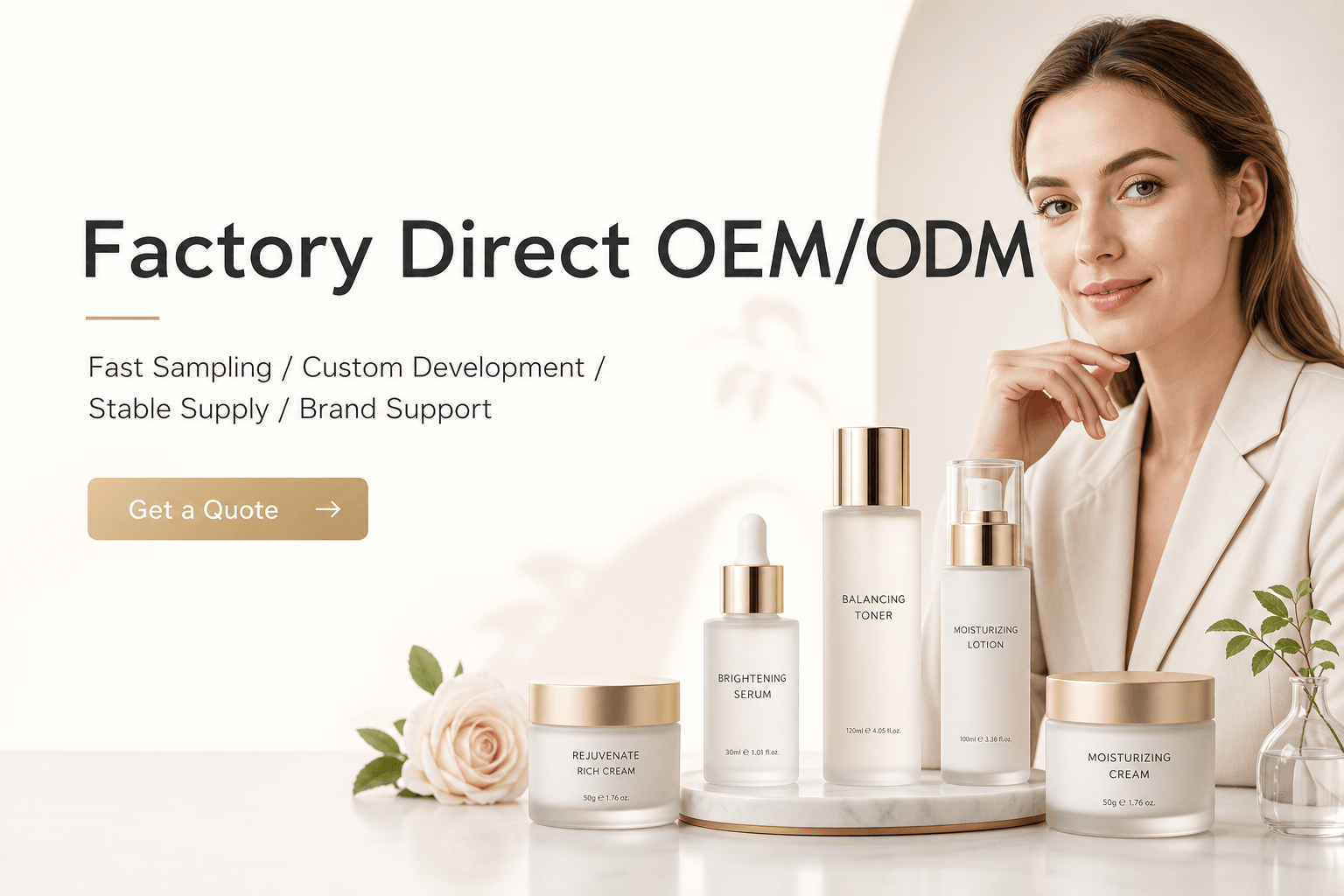
The same anti-aging set does not need to be sold the same way across every channel. A better launch strategy is to adapt the presentation according to where the product will actually be sold.
DTC website
Focus on routine simplicity, ingredient familiarity, bundle value, and visual presentation. The set should feel like a complete answer rather than four separate products placed together.
Amazon and marketplace channels
Focus on convenience, product grouping, anti-aging routine logic, and simple benefit-driven copy. Listing structure and image hierarchy matter as much as the formula story.
Spa and salon channels
Focus on aftercare support, home-use continuity, and premium take-home value. Professionals usually respond well when the set feels curated rather than mass-market.
Wholesale and distributor channels
Focus on packaging consistency, MOQ, margin potential, shipping practicality, and whether the set fits a broader product-line strategy.
OEM, ODM, and Private Label: Which Route Makes Sense?
For many US projects, private label is the fastest route if the goal is to launch with a proven routine concept under the buyer’s own branding. This can reduce the time spent on early-stage development and help the brand move faster into packaging, sampling, and launch planning.
ODM is more useful when the buyer wants to adjust texture, fragrance, packaging mix, or concept positioning. For example, a US brand may want a cleaner premium look, a softer sensory profile, or a set format aimed more directly at medspa-adjacent retail.
OEM becomes more relevant when the buyer already has stronger technical direction, benchmark references, or a more detailed brief. In that case, the manufacturer’s job is to execute the concept at production scale.
The right path depends on how much differentiation the brand needs, how quickly it wants to launch, and how tightly the product concept needs to fit the target US customer.
What to Ask Before Requesting Samples
Before contacting a manufacturer, US buyers should prepare a short product brief rather than simply asking for a price list.
That brief should ideally include:
- Target channel: DTC, Amazon, spa, salon, retail, or distributor
- Positioning: premium, accessible premium, clean-inspired, or professional skincare
- Preferred packaging style
- MOQ expectations
- Launch timeline
- Whether the set should remain standard or move toward customized OEM/ODM direction
- Preferred claim direction and ingredient story
This makes sample recommendations more accurate and helps avoid wasting time on products that do not match the launch strategy.
Why CrownDiaBio Fits This Kind of USA-Focused Project
CrownDiaBio supports private label, OEM, and ODM skincare projects for brands that need routine-based product solutions rather than one-off random formulas. For anti-aging facial sets, the value is not just manufacturing capacity. It is the ability to connect ingredient story, set structure, packaging direction, and sample planning into a launch that feels commercially usable.
If you want to review the product details first, start with the [4PCS peptide vitamin C retinol skincare set product page](https://www.crowndiabio.com/product/own-brand-4pcs-facial-peptide-vitamin-c-retinol-set/).
If you are already planning a US-focused launch and want MOQ, customization, packaging, or sample guidance, go directly to the CrownDiaBio inquiry page.
FAQ: Private Label Anti-Aging Skincare Set for USA
Why is a skincare set easier to sell than a single anti-aging product?
A set gives clearer routine logic, higher perceived value, and easier bundling for e-commerce, salon retail, and wholesale channels. It also helps customers understand how the products work together.
Why do peptide, vitamin C, and retinol work well for the US market?
These ingredients already have strong recognition in American skincare marketing. That makes the set easier to position around anti-aging, radiance, and routine-based care without starting from zero in customer education.
Is private label the best route for a US anti-aging set launch?
For many brands, yes. Private label can be the fastest route when the goal is to launch with a proven routine concept under your own brand. ODM or OEM may be better if you need deeper customization.
What should a US buyer check before placing a bulk order?
Check routine flow, texture consistency, packaging quality, MOQ, channel fit, claim wording, and whether the supplier can support repeat production and customization.
Where can I review the product or send an inquiry?
You can review the product here: Own Brand 4PCS Facial Peptide Vitamin C Retinol Set. For samples, MOQ, or branding questions, use the [inquiry page](https://www.crowndiabio.com/contact-us/).
Focused on driving US-market B2B inquiries for private label and OEM/ODM skincare partners.
Final Thoughts
For US beauty brands, a private label anti-aging skincare set can be easier to position, easier to bundle, and easier to explain than isolated single-SKU launches.
If you want a routine-led concept with recognizable ingredients and stronger e-commerce or wholesale potential, start by reviewing the set structure, packaging route, and claim direction before bulk production.
Review the product page and send your project requirements through the inquiry page for MOQ, sample, and branding support.