Private Label Skincare Kits: How to Build a Routine That Sells
A practical B2B guide to routine planning, formula mix, packaging, MOQ and OEM/ODM strategy for beauty brands.
A skincare kit is more than several products placed in one box. It presents a routine, can increase order value and gives customers a simpler way into a product range.
For B2B buyers, the formula mix, packaging, price point and usage instructions must work together. The strongest kits have a clear customer, a logical sequence and one consistent positioning.
Why Private Label Skincare Kits Can Be Easier to Launch
A kit can combine mature formulas from an existing product library while giving the buyer control over brand presentation. It can work as a starter routine, seasonal gift set, salon or spa take-home program, travel bundle, online offer or wholesale assortment.
Define the commercial angle before choosing formulas. A luxury gift set and a starter kit need different pack counts, textures, bottle sizes and packaging budgets.

Start With the Target Customer and Routine
Hydration-focused kits
A hydration kit may combine cleanser, hyaluronic acid serum, moisturizer and eye care for dry-feeling or dehydrated-looking skin.
Brightening-style kits
Vitamin C, niacinamide and related directions can support appearance-of-radiance positioning. Keep wording cosmetic and avoid medical or absolute promises.
Firming-looking and mature-skin kits
Peptides, retinol and nourishing moisturizers require careful ingredient compatibility, usage instructions, packaging stability and market-specific claim review.
Eye-care add-on kits
Eye patches, eye cream or eye essence oil can increase perceived completeness and create a different application experience.

How Many Products Should a Skincare Kit Include?
Two- or three-product kits
Smaller kits are easier for new customers to understand and can suit sampling, travel and entry-level e-commerce offers.
Four-product kits
A cleanser, serum, moisturizer and eye-care product can present a complete routine, but each item should have a clear purpose.
Larger kits
Larger kits may suit premium gifting or professional programs, but they increase inventory, labeling, packaging and shipping complexity.

Packaging Planning for Private Label Skincare Kits
- Product arrangement: use inserts, trays or dividers to prevent movement and make the sequence clear.
- Bottle and box compatibility: verify every height, width, cap, pump and dropper before finalizing the outer box.
- Label and language: reserve space for ingredients, net content, directions, batch information and market-specific requirements.
- Premium details: foil, rigid boxes and special finishes can improve presentation but affect MOQ, cost and lead time.

MOQ and OEM/ODM Route Planning
Private label kits involve more than one MOQ. Ask for separate quantities for individual formulas, bottles, labels, outer boxes, inserts, custom colors, fragrance changes and new formula development.
For CrownDiaBio private label projects, the public starting MOQ is 500 pieces. Confirm any higher MOQ required for each kit component and customization scope.
Standard private label is often the fastest route. OEM can focus on packaging and artwork, while ODM suits custom textures, active-ingredient directions or a new routine concept.
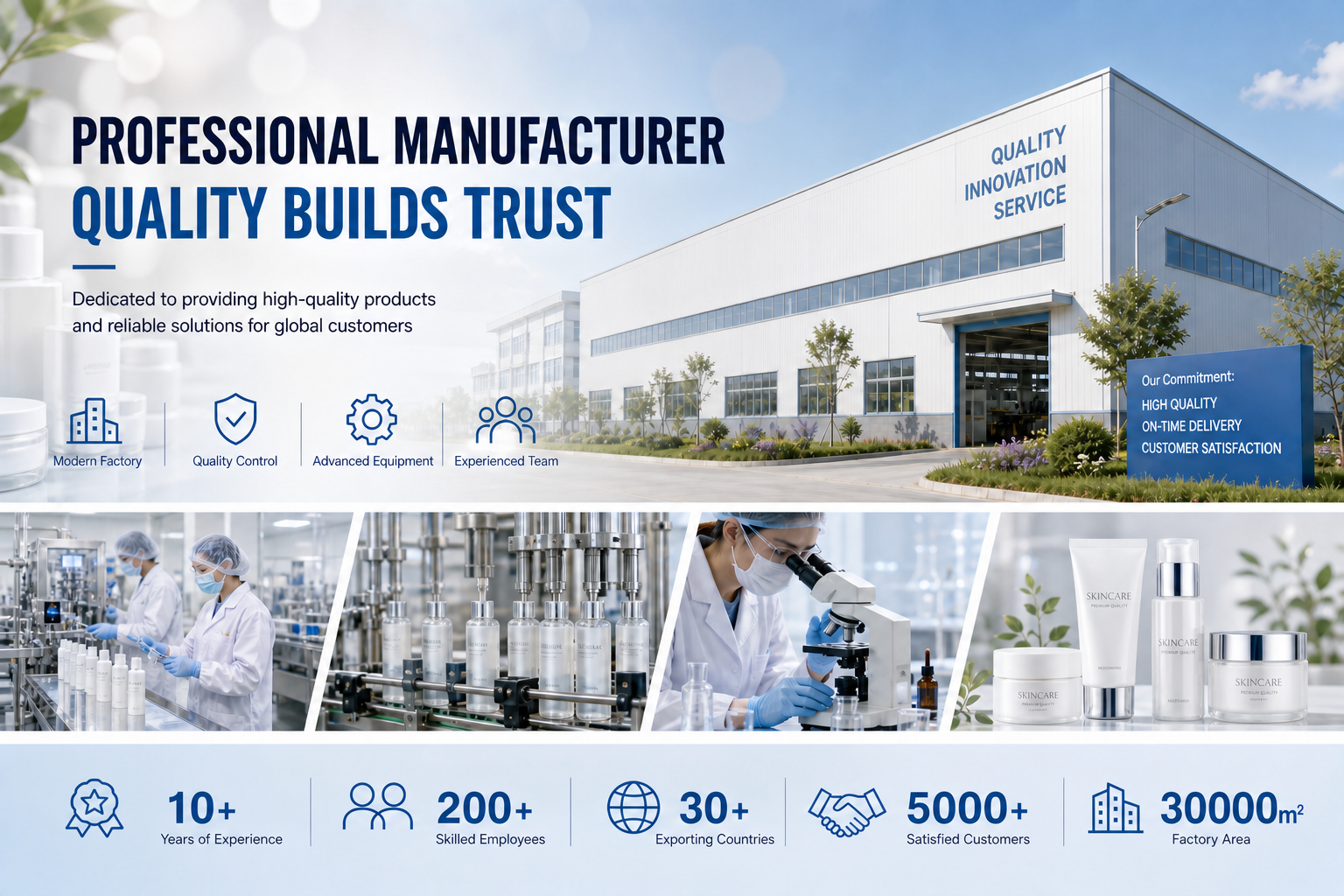
CrownDiaBio supports OEM, ODM and private label skincare projects with more than 300 mature formulas and monthly production capacity of up to 1,000,000 pcs.
Final Thoughts
A successful skincare kit begins with a clear routine, not a random collection of products. Define the customer, choose a practical pack count, confirm formula compatibility, plan the packaging and request samples before bulk production.
Ready to build a skincare kit? Contact CrownDiaBio with your target market, product categories, quantity, packaging direction and timeline.