Private Label Skincare Guide
Vitamin C Serum Private Label Wholesale: What B2B Buyers Should Check Before Ordering
Learn what to check in vitamin C serum private label wholesale projects, from formula stability and MOQ to packaging, sampling, and OEM/ODM support.
Vitamin C serum remains one of the most requested skincare categories in global beauty markets. For wholesalers, distributors, salon groups, eCommerce sellers, and brand owners, it is often seen as a practical entry product because the category is familiar, commercially proven, and easy to position within a brightening, daily care, or routine-based skincare line.
But a vitamin C serum private label wholesale project should not be evaluated only by trend value or catalog appearance. In B2B skincare manufacturing, buyers need to look closely at formula stability, texture direction, packaging compatibility, MOQ, sampling process, and how well the supplier can support long-term repeat orders.
This guide explains what B2B buyers should check before choosing a supplier for vitamin C serum private label wholesale projects.
Why Vitamin C Serum Works for Private Label Wholesale
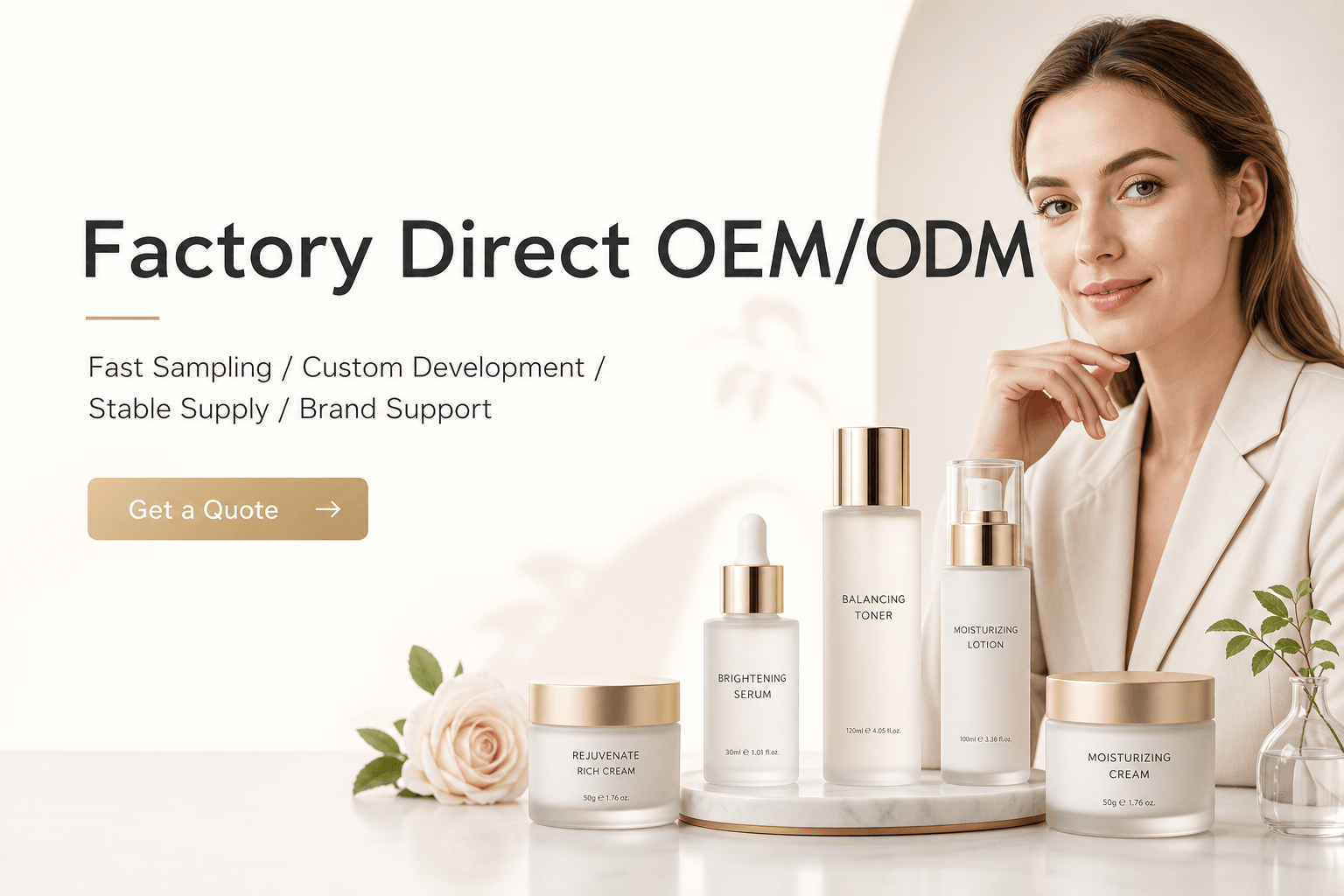
Vitamin C serum is a strong category for private label because it can fit multiple sales channels and product strategies. It can be positioned for beauty brands building a facial care range, distributors expanding a serum line, salons adding take-home skincare, or wholesalers looking for a widely recognized serum category with stable demand.
From a product-line perspective, vitamin C serum also works well with related categories such as cleanser, toner, moisturizer, facial cream, sunscreen, and complete skin care sets. This gives B2B buyers room to start with a single SKU and later build a broader routine under the same brand.
That said, not all vitamin C serum projects are equal. A supplier may offer many options, but buyers still need to confirm whether the formula direction, sensory feel, packaging, and production support actually match the target market.
What B2B Buyers Should Check Before Ordering
1. Check the Formula Positioning First
When reviewing vitamin C serum private label wholesale options, start with the product brief instead of the price list.
Ask what kind of serum you want to sell. Is the target market looking for a lightweight daily-use serum, a more premium texture, a brightening-positioned formula, or a serum that fits into a wider facial routine? Even within the same category, texture, absorption speed, fragrance direction, finish, and packaging style can change the commercial fit.
A serious private label cosmetics manufacturer should be able to explain the practical difference between available serum options. If the supplier only says that every serum is a best seller without clarifying texture, use scenario, or product-line fit, that is not enough for B2B decision-making.
For buyers planning a complete line, it is useful to ask how the serum can pair with cream, cleanser, or mask products so the final range feels coordinated instead of random.
2. Ask About Formula Stability and Packaging Compatibility
Vitamin C serum is a category where packaging and formula compatibility matter. Buyers should not assume that a serum that looks good in a sample bottle will perform the same way after filling, shipping, storage, and repeat production.
This is why you should ask the supplier how they approach packaging selection for serum projects. A professional OEM ODM skincare partner should be able to discuss bottle format, pump or dropper suitability, filling considerations, and how packaging choice affects the product’s commercial presentation.
You do not need drug-style technical language here. What matters is whether the manufacturer treats serum packaging as part of product quality management rather than as an afterthought. For wholesale projects, that distinction affects both customer experience and reorder reliability.
3. Confirm Whether Private Label or ODM Is the Better Route

Many buyers ask for private label when what they really need is a slightly more tailored ODM process.
Private label is usually the better fit when you want to launch faster using an existing or semi-ready serum formula. This route often reduces development time and makes sampling more straightforward. It is suitable for buyers who already know the category they want and need a practical route to market.
ODM may be a better fit when you need more adjustment in texture, sensory profile, fragrance direction, packaging combination, or product positioning. For example, a distributor may want a more mass-market daily serum, while a salon brand may prefer a more premium feel for treatment-related retail support.
A good manufacturer should help you choose the right route based on timeline, budget, and market needs instead of pushing every project into the same model.
4. Review MOQ and Wholesale Order Flexibility
MOQ is one of the biggest commercial questions in vitamin C serum private label wholesale projects.
Some buyers are testing a new market or launching a first serum under their own label. Others are experienced distributors planning a broader wholesale rollout. These two buyers do not need the same order structure. That is why MOQ should be discussed together with packaging choice, sample confirmation, and reorder expectations.
A reliable skincare manufacturer should explain which MOQs apply to standard packaging, which ones may change with custom components, and how trial orders differ from larger production orders. Clear MOQ communication helps buyers protect cash flow and avoid unrealistic launch assumptions.
If the supplier gives vague answers on MOQ, lead time, or component requirements, expect the same lack of clarity later in production.
5. Evaluate Sampling as a Communication Test
Sample quality matters, but sample handling matters just as much.
When requesting a vitamin C serum sample, use the process to evaluate the supplier’s communication standard. Do they ask about your target channel, preferred texture, packaging direction, and price positioning? Do they explain the difference between formula options? Do they record revisions clearly if you want a lighter or richer feel?
For B2B buyers, sampling is not only about checking the product. It is also about checking whether the factory can manage feedback in a structured way before you move into bulk production.
Poor sample communication creates avoidable risk. Good sample communication usually signals a more reliable manufacturing workflow.
6. Look Beyond the Serum and Assess Product-Line Potential
If your goal is only one SKU, a basic private label route may be enough. But many wholesale buyers eventually want more than one product.
That is why it is smart to ask whether the manufacturer can support related categories such as cleansers, creams, masks, eye care, sunscreen, or facial kits. A supplier with broader formula resources can help you expand from one vitamin C serum into a more complete skincare line when the first product performs well.
This matters for distributors and brand owners because repeat business is often built through line extension. If your supplier can support coordinated packaging and adjacent categories, future product development becomes more efficient.
To understand the manufacturer’s broader service positioning, you can also visit the CrownDiaBio homepage.
7. Check Quality Systems and Supplier Reliability

In skincare wholesale, the supplier’s reliability matters as much as the product category.
Ask how the manufacturer manages production records, inspection steps, and project communication. Certifications and documentation do not replace buyer due diligence, but they are useful signals when evaluating a long-term OEM/ODM skincare supplier.
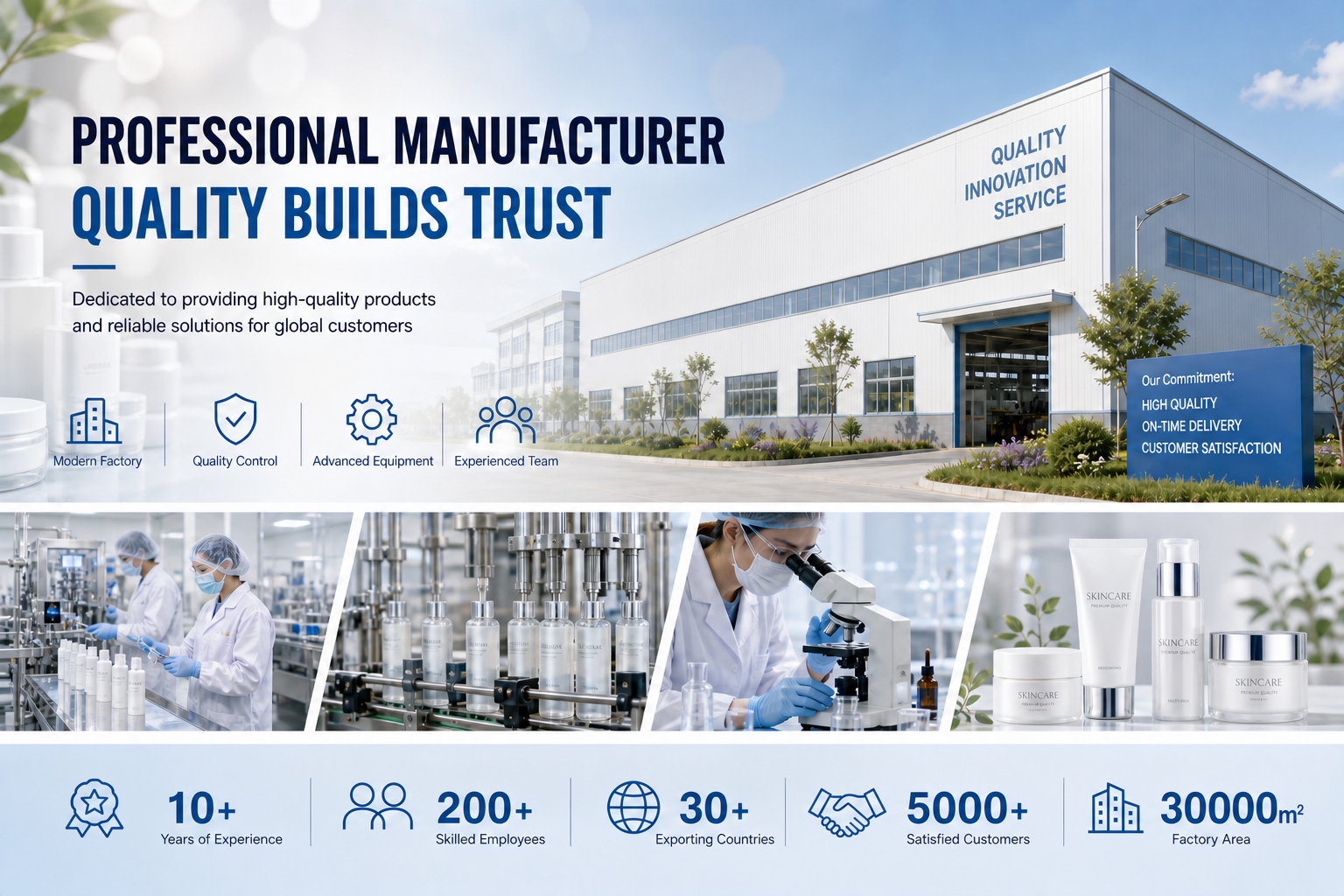
For overseas B2B projects, buyers commonly review whether the supplier can support GMP, ISO 22716, and SGS-related documentation where relevant. They also want to know whether the factory can handle repeat production with stable communication and realistic lead times.
A supplier that understands quality communication, export-oriented cooperation, and consistent production planning is usually a better wholesale partner than one that only competes on low price.
Red Flags in Vitamin C Serum Private Label Wholesale Projects
Be cautious if a supplier:
- Uses exaggerated skincare claims or medical-style wording
- Cannot explain the difference between serum options
- Avoids clear answers on MOQ, lead time, or packaging
- Pushes bulk orders before sample approval
- Treats packaging as only a branding issue rather than a product-fit issue
- Has no clear path for related product-line expansion
These points do not automatically rule out a supplier, but they are signs that the project needs deeper review before you move forward.
How CrownDiaBio Supports Vitamin C Serum Private Label Wholesale Buyers
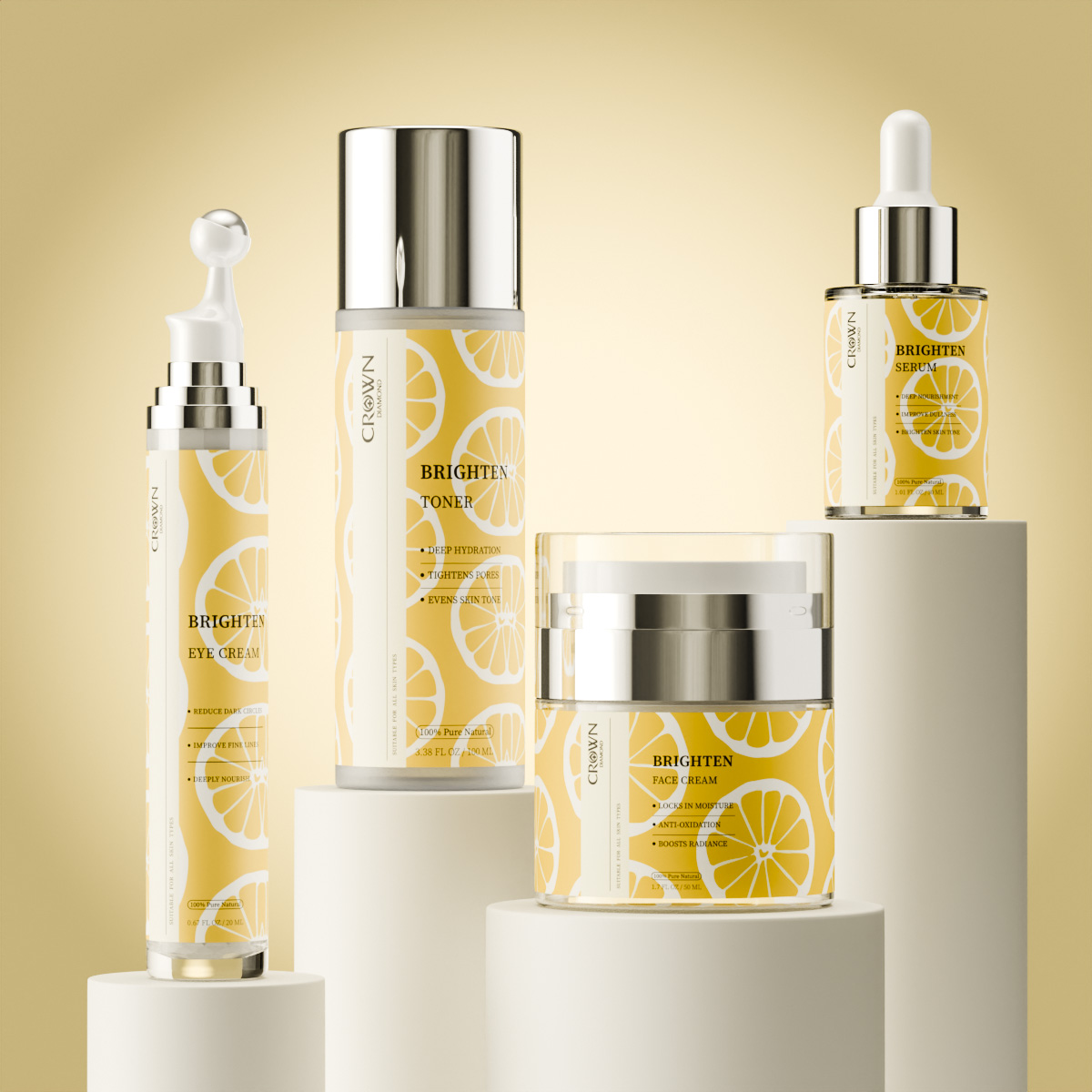
CrownDiaBio is a Guangzhou-based skincare manufacturer with more than 20 years of experience in OEM, ODM, private label, and custom formulation support for B2B beauty customers. The company supports categories such as serums, creams, cleansers, masks, facial kits, body lotion, and body care products.
For buyers exploring vitamin C serum private label wholesale, CrownDiaBio can support formula selection, sample development, packaging coordination, and production planning based on the buyer’s market direction. With around 300+ formula options, MOQ from 100 units for selected projects, monthly production capacity up to 660,000 units, and GMP, ISO 22716, and SGS-related support, the company is positioned to help both trial orders and long-term supply planning.
Final Thoughts
A vitamin c serum private label wholesale project should be evaluated as a business decision, not only as a product purchase. The best supplier is not simply the one with the cheapest quote or the broadest catalog. It is the one that can match formula direction, communication quality, packaging coordination, MOQ structure, and scalable production support to your actual market needs.
If you are reviewing serum suppliers for your brand, wholesale channel, or salon line, start with a clear brief and compare how each factory handles samples, packaging, MOQ, and future line expansion.
If you want to discuss your project requirements, packaging direction, and sampling plan, visit the Contact Us page or start from the homepage.
Contact CrownDiaBio to discuss your vitamin C serum private label wholesale project and request formula options, packaging suggestions, or samples for your brand.