
Customizable Skin Care Guide
Customizable Skin Care: How Brands Build Flexible Product Lines for Different Markets
Learn how customizable skin care helps beauty brands adjust formulas, packaging, MOQ, and product positioning for different markets and channels.
Customizable skin care has become increasingly important for beauty brands that want more flexibility than standard private label products can offer, but do not always need full formula development from the ground up. For distributors, salon groups, startup brands, and established beauty companies expanding into new regions, customization can make the difference between a product line that only looks acceptable and one that actually fits the market.
In B2B skincare manufacturing, not every buyer wants the same thing. One market may prefer lightweight textures and fresh packaging. Another may respond better to richer creams, fragrance-free positioning, or simplified routines. Some brands need a fast launch with only small adjustments. Others want deeper changes in formula feel, packaging logic, or product-line structure. This is where customizable skin care becomes commercially useful.
This guide explains what customizable skin care means in a B2B context, which parts of a product line can be adjusted, and how brands can use customization strategically without making development unnecessarily complex.
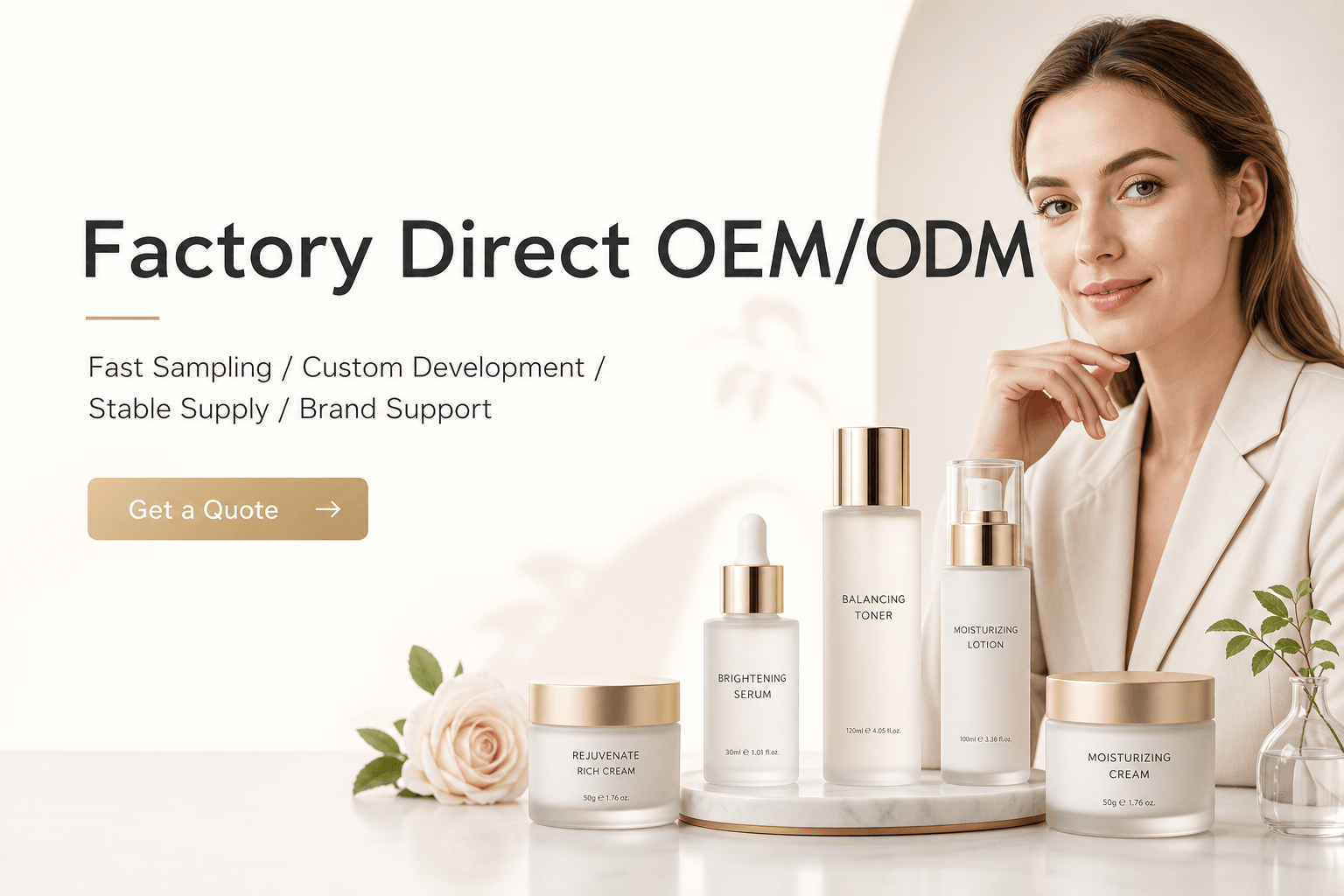
What Does Customizable Skin Care Mean?
Customizable skin care refers to skincare products or product lines that can be adjusted to match a brand’s market, channel, pricing strategy, or consumer preference. These adjustments do not always mean building a formula completely from zero. In many OEM and ODM projects, customization means working from an existing base and refining it in practical ways.
For example, a brand may want to adjust:
- Texture and skin feel
- Fragrance direction or fragrance-free positioning
- Packaging format and component style
- Product combination within a set or line
- Active concept or ingredient story
- Label positioning for different customer groups
This makes customizable skin care especially relevant for B2B buyers who need speed and flexibility at the same time. Instead of choosing between “fully standard” and “fully custom,” they can develop a middle path that better fits business reality.
Why Customization Matters for B2B Beauty Brands
A skincare product is not sold in isolation. It is sold within a market, a channel, and a price expectation. A formula that works well for one audience may feel too heavy, too plain, or too premium for another. That is why customization is not only a product issue. It is a market-fit issue.
For B2B brands, customizable skin care helps solve several common problems:
- A standard formula does not match local texture preference
- Existing packaging looks too generic for the target channel
- The product range needs to be adjusted for salon, retail, or e-commerce use
- MOQ needs to stay manageable while still allowing brand differentiation
- A brand wants faster launch than full custom development usually allows
In practical terms, customization helps brands stay flexible without losing supply efficiency. That is especially valuable for companies testing multiple channels, entering new regions, or building category expansion plans step by step.
Which Parts of a Skincare Line Can Be Customized?
Formula Texture and Sensory Profile
Texture is often the first thing that needs adjustment. Buyers in humid climates may prefer lighter emulsions, fast absorption, and a non-sticky finish. In drier markets, richer creams and more nourishing textures may be more suitable.
Even small texture adjustments can change how a product is received. A serum that feels elegant in one market may feel too tacky in another. A body lotion that seems moisturizing in sampling may feel too heavy for daily use in tropical regions. This is why texture customization is often one of the most commercially useful changes a brand can make.
Ingredient Direction and Product Positioning
Customization can also involve the formula concept rather than only the texture. A buyer may want a hydration-focused line, a barrier-support direction, a brightening appearance concept, or a premium peptide-positioned product range. The wording must remain compliant, but the ingredient story still matters in how a product is marketed and understood.
For B2B buyers, this is useful because different channels respond to different product stories. Salon brands may prefer treatment-support positioning. E-commerce sellers may need clearer hero-benefit communication. Retail ranges may need a broader daily-care concept.
Packaging and Line Presentation
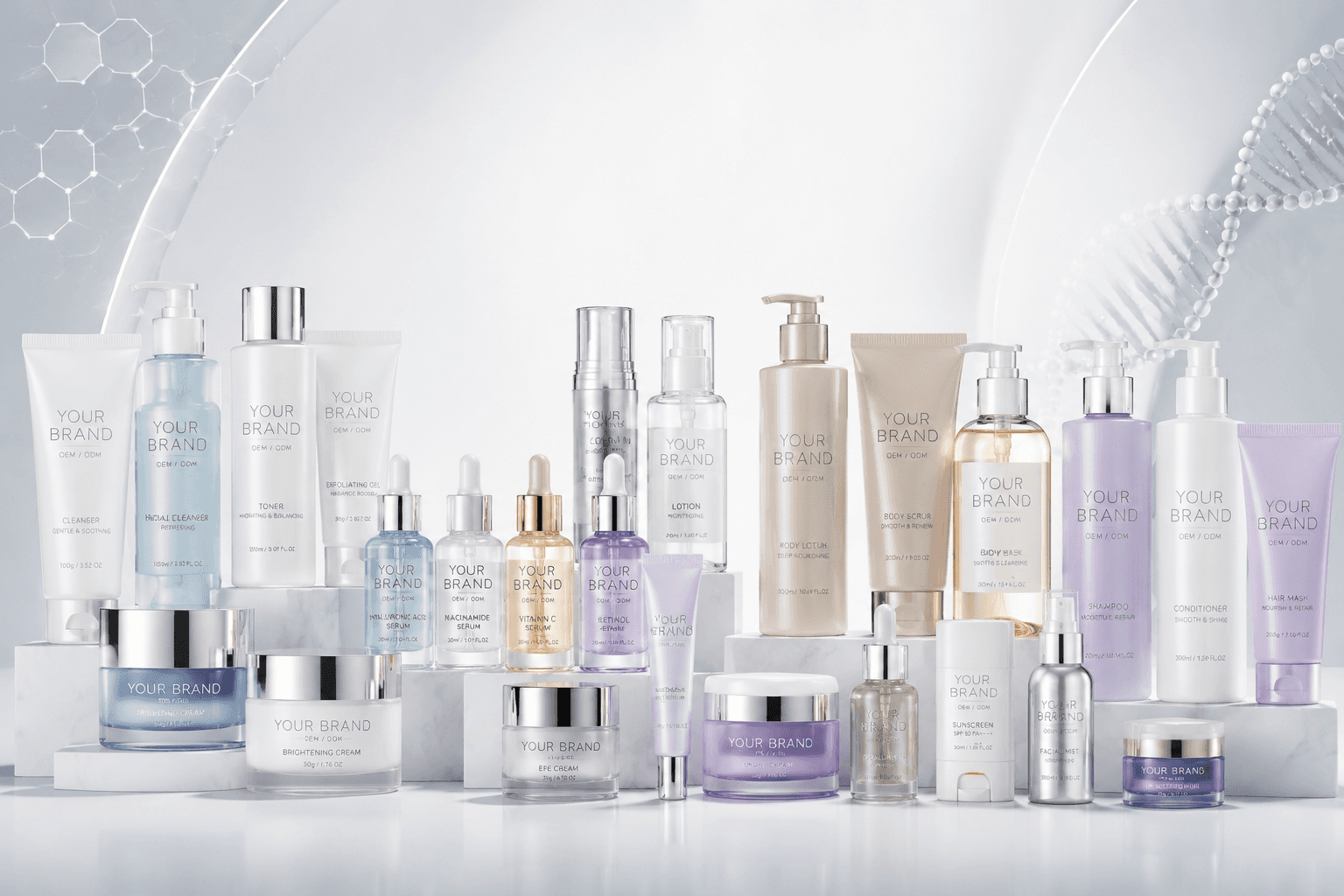
Packaging customization is one of the most visible forms of product differentiation. This can include bottle or jar selection, cap style, label structure, color direction, outer box design, and how the products look together as a line.
Good packaging does more than improve appearance. It affects shipping safety, price perception, shelf consistency, and whether the line feels coherent across cleansers, serums, creams, masks, and body care products. For brands building a scalable skincare line, packaging should be planned as a system, not as isolated pieces.
Product Mix and Routine Structure
Not every market needs the same number of products. One brand may want a simple three-step routine. Another may want a complete facial kit. A salon channel may need treatment-support take-home products, while an e-commerce brand may want starter bundles that are easier to explain and purchase.
This means customization is often about line architecture as much as formula. A manufacturer should be able to help buyers decide whether the range should start with hero SKUs, complete kits, or a phased product-line rollout.

Semi-Custom vs Full Custom: Which Route Makes More Sense?
Not every brand needs full custom formulation. In many cases, semi-custom development is the more practical option.
Semi-custom projects usually work best when the buyer wants:
- Faster launch timing
- Lower development complexity
- Formula adjustments based on proven bases
- More manageable MOQ
- Brand differentiation without rebuilding everything from the beginning
Full custom development is more suitable when the brand has a very specific formulation requirement, a clearer long-term product identity, or a business model that depends heavily on unique product character.
For many B2B skincare brands, semi-custom development offers the best balance. It gives enough flexibility to improve market fit while keeping the project commercially realistic.
How Customization Affects MOQ, Lead Time, and Cost
Customization creates commercial value, but it also changes project conditions. Buyers should understand this early.
When more elements are customized, the project may involve:
- More sample rounds
- Longer confirmation cycles
- Different packaging sourcing needs
- Higher minimums on some components
- Additional coordination between formula and packaging decisions
That does not mean customization is inefficient. It means it should be used with purpose. If a change helps the product fit the target market better, improve brand consistency, or support stronger sell-through, it may be worth the extra coordination. If the change adds complexity without clear commercial value, it may slow the project unnecessarily.
A professional OEM/ODM skincare partner should help the buyer distinguish between useful customization and decorative over-complication.
Common Mistakes Brands Make with Customizable Skin Care
One common mistake is trying to customize everything at once. A new brand may adjust texture, packaging, fragrance, formula story, box structure, and SKU count all in the same first project. This often creates delays and makes decision-making harder.
Another mistake is focusing only on what looks different instead of what sells better. Customization should improve market fit, not just visual novelty.
Brands also make mistakes when they do not align customization with the actual sales channel. A salon-focused routine, a distributor-led line, and an e-commerce starter range should not be built in exactly the same way.
The best approach is to customize strategically:
- Keep changes tied to business goals
- Prioritize the adjustments customers will actually notice
- Balance brand identity with supply practicality
- Build room for future expansion instead of forcing everything into the first launch
How CrownDiaBio Supports Customizable Skin Care Projects
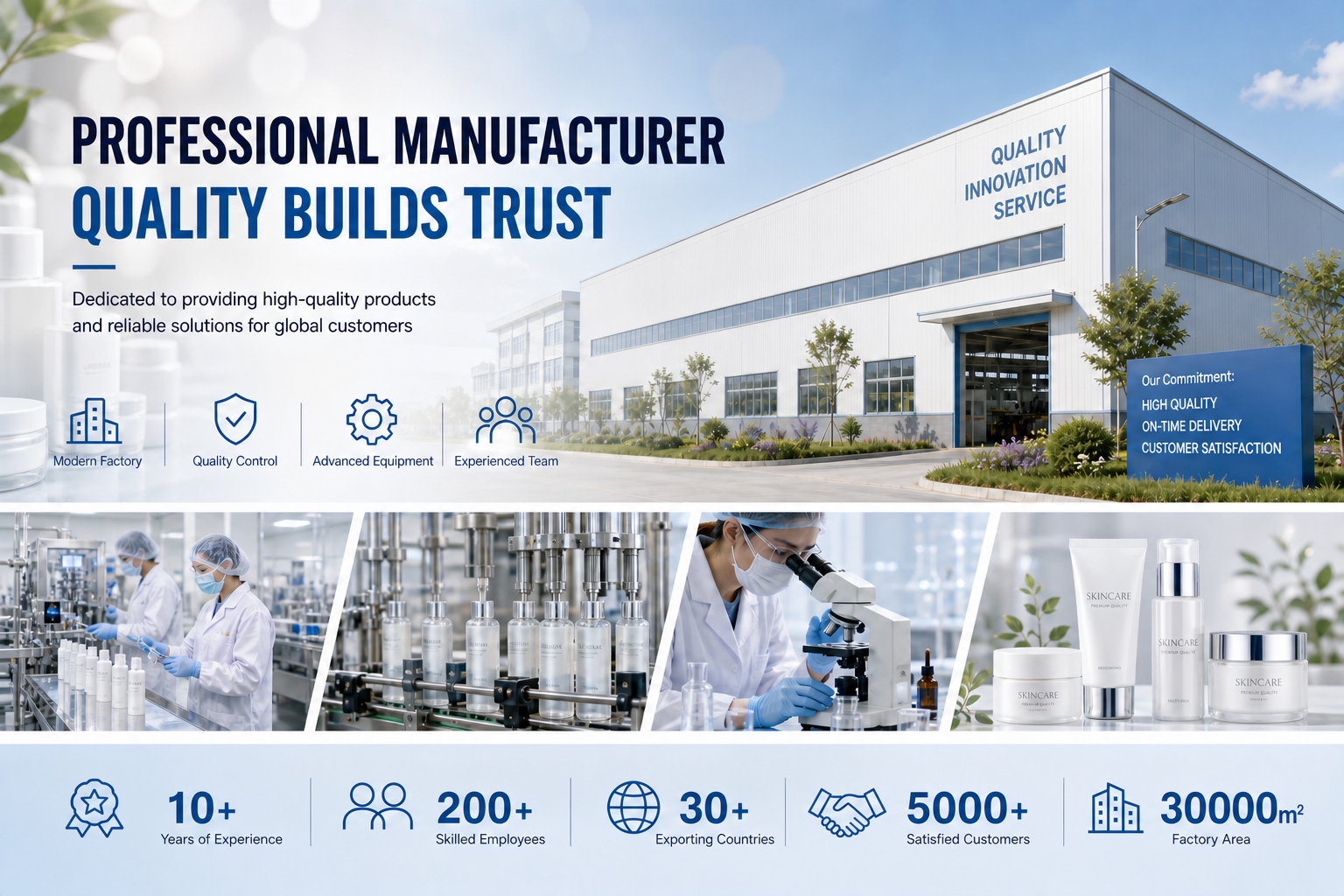
CrownDiaBio is a Guangzhou-based skincare manufacturer with more than 20 years of experience in OEM, ODM, private label, and custom formulation projects. For B2B brands that need more flexibility than standard catalog products, the company supports practical customization across formula selection, texture direction, packaging coordination, and product-line planning.
With around 300+ formula options, MOQ from 100 units for selected projects, monthly capacity up to 660,000 units, and GMP, ISO 22716, and SGS-related support, CrownDiaBio can help brands develop customizable skin care projects for facial care, serums, creams, masks, body lotion, and body care categories.
For related reading, see Custom Skincare vs Private Label if you are comparing development models, or Skin Care Set: How B2B Brands Can Build a Complete Product Line if your next step is routine-based set planning.
Final Thoughts
Customizable skin care gives B2B beauty brands a practical way to build products that fit different markets without automatically moving into the slowest and most complex development path. It creates room to adjust texture, positioning, packaging, and product mix based on real commercial needs.
For brands that want better market fit, stronger brand presentation, and more flexible product planning, customization is often not an extra feature. It is a smarter development strategy.
Contact CrownDiaBio to discuss your customizable skin care project, request formula options, and explore packaging and product-line solutions for your target market.
1 thought on “Customizable Skin Care: How Brands Build Flexible Product Lines for Different Markets”
Comments are closed.