
Private Label Stretch Marks Cream Guide
Private Label Stretch Marks Cream: What B2B Buyers Should Check Before Launching
Learn how to evaluate a private label stretch marks cream project for B2B markets, from formula positioning and packaging to MOQ, compliance, and supplier support.
Private label stretch marks cream is a practical body care category for brands targeting maternity care, body-firming routines, spa channels, post-weight-change care, and daily moisturizing lines. For distributors, salon groups, eCommerce sellers, and skincare brand owners, this type of product can work as a focused single SKU or as part of a wider body care range.
However, a private label stretch marks cream project should not be evaluated only by packaging appearance or trend language. In B2B skincare manufacturing, buyers need to review the formula direction, sensory feel, claim wording, packaging fit, MOQ structure, and the manufacturer’s ability to support repeat production.
If you want a live product reference, you can review CrownDiaBio’s Stretch Marks Cream product page to discuss packaging style, positioning, and OEM/ODM options with the factory team.
Why Private Label Stretch Marks Cream Has B2B Potential
Stretch marks cream sits in a commercially useful middle ground. It is more targeted than a general body lotion, but still broad enough to fit multiple retail and professional channels. A brand can position it as part of postpartum body care, appearance-focused body care, massage-related retail support, or a moisturizing and firming body routine.
For B2B buyers, this matters because targeted categories often make product storytelling easier. A general lotion may compete mainly on fragrance or price. A stretch marks cream, by contrast, gives the buyer a clearer merchandising angle and a more specific customer use scenario.
This category can also support line extension. After one body care SKU performs well, the same brand may expand into body lotion, body butter, massage oil, body scrub, or a coordinated body care set.
Start With Formula Positioning, Not Just the Product Name
The term stretch marks cream sounds straightforward, but B2B buyers still need to define the commercial direction before requesting samples.
Ask what role the product will play in the line. Is it intended for daily body moisturizing with a more focused positioning? Is the target market looking for a rich cream, a lighter lotion-cream texture, a fragrance-led body product, or a more premium spa-style application experience? These choices influence texture, finish, absorption speed, packaging, and price positioning.
A reliable private label cosmetics manufacturer should be able to explain the difference between available body care formula routes. If the supplier only offers generic language such as “best seller” or “high quality” without discussing texture, audience, or channel fit, the product brief is not yet strong enough.

Keep Product Claims Compliance-Safe
This category needs careful wording. In cosmetic manufacturing, buyers should avoid exaggerated or medical-style promises about scar removal, treatment, or guaranteed body transformation unless they are pursuing a regulatory path that supports those claims in the target market.
For most B2B cosmetic projects, safer language focuses on moisturizing support, smoother-looking skin, improved skin comfort, elasticity-related positioning, and body care routine support. Claim control is especially important for export-oriented brands because wording that seems normal in one market may create compliance problems in another.
A professional OEM ODM skincare supplier should understand this distinction and help buyers keep the project within cosmetic positioning rather than drifting into risky language.
Review Texture, Spreadability, and After-Feel
Body care projects are highly sensory. A cream may look attractive in a jar or tube, but B2B success often depends on how it feels in real use.
For private label stretch marks cream, buyers should ask about:
- Absorption speed
- Richness versus lightness
- Slip during massage or body application
- Residual feel after application
- Fragrance intensity
- Compatibility with humid or dry climate preferences
These points matter because the same formula concept may be received differently across markets. A rich cream may work well for premium body care positioning, while a lighter finish may be more practical for hot-weather regions or routine daily use. Sampling should test not only whether the cream feels pleasant, but whether it fits the actual end-user expectation.

Check Packaging Route Early
Packaging affects product presentation, but it also affects project feasibility.
For a private label stretch marks cream project, the buyer should decide whether the product will be sold in a tube, pump bottle, airless pack, or jar. Each route changes the commercial appearance, handling experience, shipping profile, and minimum order logic. A body care product aimed at eCommerce trial orders may need a different pack than one intended for salon resale or maternity gift bundles.
A capable supplier should explain how packaging choice connects to MOQ, lead time, labeling, and component availability. If the supplier treats packaging as a last-minute branding step instead of part of the product planning process, the project may face unnecessary delays later.
Confirm Whether Private Label or ODM Is the Better Model
Not every buyer needs the same development route.
Private label is usually the better choice when the buyer wants to move faster using a ready or semi-ready body care formula. It is useful for brands that already understand the category and want a simpler launch path with lower development complexity.
ODM becomes more relevant when the buyer wants to adjust texture, fragrance profile, packaging combination, or product positioning more clearly. For example, one brand may want a lightweight daily body cream, while another may want a richer premium product with a spa-oriented feel.
A good manufacturer should recommend the right model based on budget, lead time, and market objective rather than forcing all buyers into the same route.
Understand MOQ and Repeat-Order Practicality
MOQ is one of the most important commercial filters in body care projects.
A startup brand, a regional distributor, and a salon purchasing team may all inquire about private label stretch marks cream, but their inventory strategies are not the same. Buyers should ask which MOQs apply to standard packaging, which change when custom components are introduced, and how reorder planning works if the product performs well.
Clear MOQ communication helps prevent a common B2B mistake: approving a product concept that looks commercially attractive but becomes difficult to launch because packaging, carton quantity, or component sourcing was not discussed early enough.
Use Sampling to Evaluate Supplier Communication
The sample itself is only part of the review.
In a serious B2B skincare project, the sampling stage should also test how the factory manages communication. Do they ask about your sales channel, target customer, packaging preference, and expected price level? Can they explain the difference between sample versions? Do they document revision requests clearly if you want the texture less greasy, the fragrance softer, or the packaging direction upgraded?
A manufacturer that handles samples in a structured way is usually easier to work with once the project enters bulk production. Poor sampling communication often signals problems later in timeline management and order execution.
Look at Body Care Expansion Potential
Even if the first launch is only one SKU, many buyers eventually expand.
That is why it is useful to ask whether the supplier can support adjacent body care categories such as body lotion, body butter, massage oil, body scrub, shower gel, or body care sets. A broader category base makes it easier to build repeat business under one manufacturing relationship.
If you also want to explore a wider body care route, the CrownDiaBio Body Care page gives a broader view of the categories the factory supports.
Need a body care range that fits your market?
Discuss texture direction, packaging route, MOQ, and OEM/ODM options with CrownDiaBio before you finalize your launch plan.
Red Flags in a Private Label Stretch Marks Cream Project
Be cautious if a supplier:
- Uses treatment-style or guaranteed-result wording
- Cannot explain texture differences between formula options
- Avoids clear discussion of MOQ and packaging requirements
- Pushes bulk production before sample confirmation
- Provides vague answers about repeat-order support
- Has no related body care capability beyond a single item
These are not automatic deal breakers, but they are signs that the project needs deeper review before launch.
How CrownDiaBio Supports Private Label Stretch Marks Cream Projects
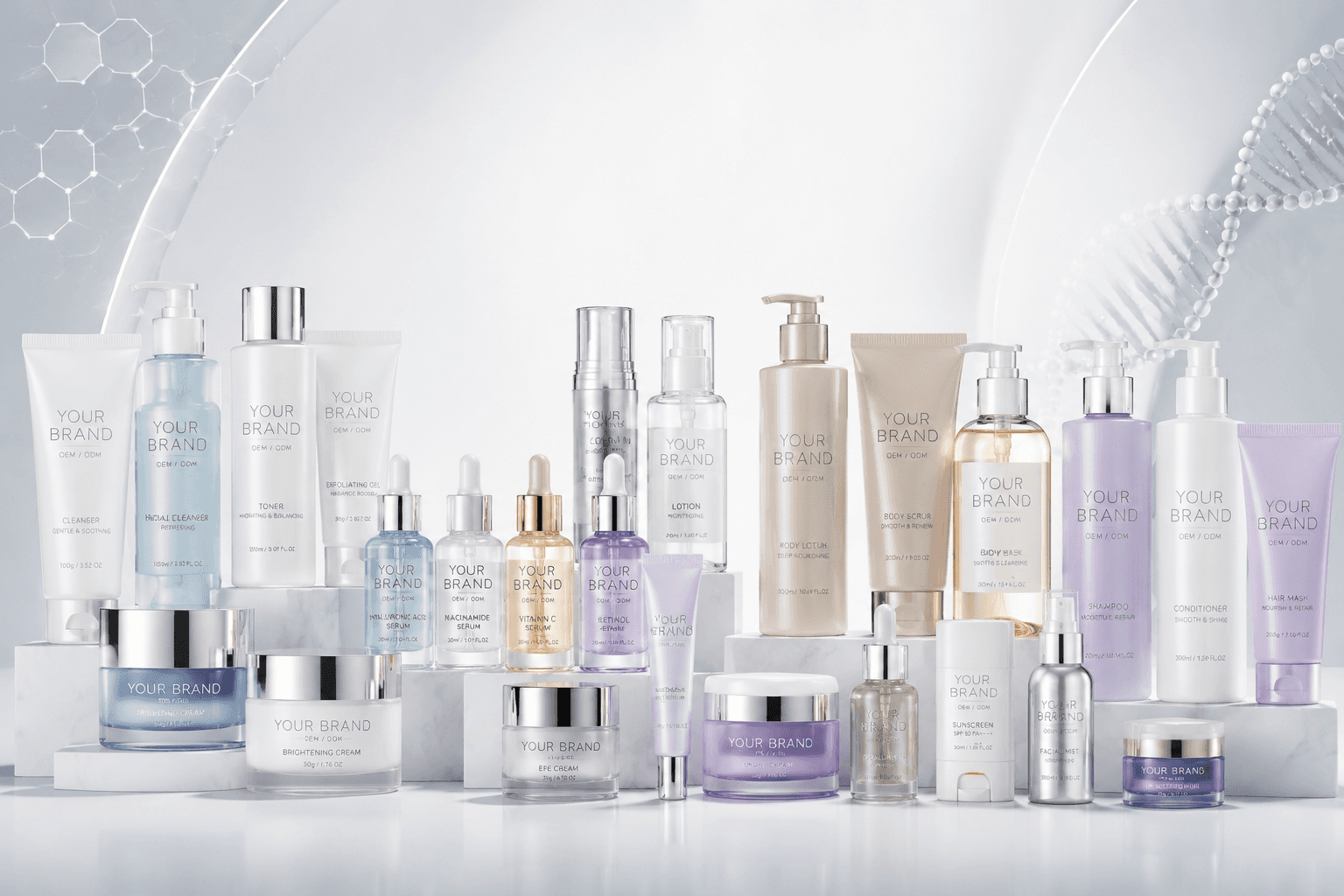
CrownDiaBio is a Guangzhou-based skincare manufacturer with more than 20 years of experience in OEM, ODM, private label, and custom formulation support for B2B beauty customers. The company supports body care categories such as body lotions, body creams, body scrubs, shower gels, massage oils, and coordinated body care sets.
For buyers evaluating private label stretch marks cream, CrownDiaBio can support formula selection, sampling, packaging coordination, and production planning based on the target market and project scale. With around 300+ formula options, MOQ from 100 units for selected projects, monthly capacity up to 660,000 units, and GMP, ISO 22716, and SGS-related support, the company can assist both test-market launches and long-term supply planning.
Final Thoughts
A private label stretch marks cream project should be treated as a category-planning decision, not only a packaging decision. The best supplier is not simply the one with the lowest quote. It is the one that can match formula direction, compliant claim wording, sensory fit, packaging logic, MOQ structure, and stable production support to your actual business model.
If you are planning a body care launch or expanding into a more targeted body product range, start with a clear product brief and compare how each supplier handles sampling, packaging, and repeat-order readiness.
To discuss your project, visit the Stretch Marks Cream product page, the Body Care page, the Contact Us page, the homepage, or the official CrownDiaBio Facebook page.