Skincare Product Development Guide
Skincare Product Development for Europe and USA: Practical OEM/ODM Solutions for Beauty Brands
This guide explains how to plan a skincare line with an OEM/ODM factory when your goal is to build products that are easier to present to European and American buyers, retail partners, and online customers.
Skincare product development for Europe and USA requires more than choosing a formula from a catalog. Buyers in these markets usually compare products by texture, ingredient direction, packaging quality, claim wording, retail presentation, and whether the manufacturer can support repeat orders after the first launch.
For private label beauty brands, distributors, salons, Amazon sellers, and e-commerce operators, the real question is not simply “Which skincare product is popular?” A better question is: “Which product solution fits my target market, channel, price point, compliance expectations, and launch budget?”
This guide explains how to plan a skincare line with an OEM/ODM factory when your goal is to build products that are easier to present to European and American buyers, retail partners, and online customers.
Why Skincare Product Development Needs a Market-First Plan
Many projects start from a product name: vitamin C serum, face cream, body lotion, body scrub, or skincare set. These categories are familiar, but a category name alone does not create a strong product.
For Europe and USA markets, product development should begin with a market-first plan. That means defining the sales channel, target customer, texture preference, expected price range, packaging style, and claim direction before asking the manufacturer to send samples.
A market-first brief helps the OEM/ODM skincare factory recommend formulas more accurately. For example, a lightweight serum for Amazon customers may need a different texture and packaging route from a spa-positioned serum sold through professional beauty channels. A body lotion for dry winter markets may need a richer after-feel than a lotion designed for fast-absorbing daily use.
Before sample selection, buyers should clarify:
- Target market: Europe, USA, or a specific country/region
- Sales channel: e-commerce, distributor, salon, spa, retail, or wholesale
- Product role: hero product, supporting SKU, bundle item, or seasonal launch
- Texture direction: lightweight, rich, creamy, gel-like, fast-absorbing, or rinse-off
- Packaging route: bottle, jar, tube, pump, airless bottle, carton, or set box
- Positioning: entry-level, mid-market, premium, natural-inspired, spa-style, or clinical-look cosmetics
This is where serious product planning becomes different from random sample buying.
Build a Focused Product Solution, Not a Scattered SKU List
A common mistake in early private label skincare projects is trying to launch too many products at once. More SKUs may look impressive on a product list, but they can also create higher inventory pressure, more packaging decisions, slower sampling, and weaker marketing focus.
For Europe and USA buyers, a focused product solution is usually stronger. A new brand may start with one hero product and two or three support products. A distributor may prefer a body care line that is easy to explain to retail customers. A salon buyer may need a facial kit that supports a complete service routine.
Practical starting solutions include:
- **Facial care set:** cleanser, serum, cream, mask, or eye care for routine-based selling
- **Vitamin C serum line:** serum plus moisturizer or brightening-positioned support products
- **Body care set:** body scrub, body lotion, body cream, or hand care
- **Anti-aging cosmetic line:** peptide-based cosmetic skincare, firming cream, serum, or facial kit
- **Moisturizing line:** face cream, body lotion, mask, and daily-use care products
The goal is to make the product range look intentional. Buyers should be able to explain why each SKU exists, how the products work together in a routine, and which customer problem the line is designed to address in cosmetic-safe language.
For related planning, brands can also review our guide on customizable skin care to understand how formula, packaging, and product-line flexibility connect.
Facial Kits: A Strong Option for Routine-Based EU and US Selling
Facial kits can be useful for European and American brands because they create a complete routine instead of relying on one single item. A set format can also support gift selling, salon programs, distributor catalogs, and e-commerce bundles.
A facial kit may include cleanser, toner, serum, cream, mask, eye care, or targeted cosmetic products. The exact combination should depend on the target customer and channel. For example, an e-commerce brand may prefer a simple three-step kit that is easy to understand online. A salon or spa buyer may need a more complete set for professional presentation.
When developing a facial kit, buyers should check whether the formulas feel consistent as a routine. A serum should not feel disconnected from the cream. The fragrance direction should not conflict across products. Packaging colors, bottle shapes, label hierarchy, and carton design should make the set look like one planned collection.
A professional OEM/ODM skincare manufacturer should help buyers compare formula options, adjust textures, coordinate packaging, and prepare samples as a complete product solution rather than separate unrelated items.
Body Lotion and Body Care: High Repeat Potential With Texture Details

Body care is often a practical category for EU and US markets because it can support daily use, seasonal care, fragrance-led concepts, spa-style positioning, and larger-size repeat purchases. However, body lotion and body cream projects still need careful texture planning.
A body lotion that feels pleasant in one market may feel too sticky, too light, or too heavy in another. Buyers should test spreadability, absorption speed, after-feel, fragrance level, pump compatibility, and how the product feels under clothing after several minutes.
Body care development can include:
- Lightweight daily moisturizing body lotion
- Richer body cream for dry-feel positioning
- Body scrub for exfoliation and shower routine support
- Hand cream or foot care products for add-on selling
- Fragrance body care sets for gift or retail channels
For Western markets, body care copy should stay attractive but responsible. Instead of using absolute transformation claims, safer cosmetic language can focus on helping skin feel smoother, softer, more moisturized, or more comfortable after use.
OEM/ODM Solutions: Choose the Right Development Route
Product development can follow different routes depending on timeline, budget, and differentiation needs.
Private label is usually the fastest route. Buyers choose from existing or semi-ready formulas, then customize branding, packaging, label design, and sometimes fragrance or texture direction. This route can be suitable for market testing, first launches, and lower-MOQ projects.
ODM is a better fit when the buyer needs a more specific concept. This may include texture adjustment, fragrance selection, ingredient story, product combination, packaging coordination, or a formula direction designed around a target market.
OEM is more suitable when the buyer already has a clearer brief, formula idea, benchmark sample, or technical requirement. In this route, the manufacturer helps turn the brief into a scalable production project.
For Europe and USA inquiries, the best supplier is not always the one that sends the most samples. It is the one that can explain which development route fits the buyer’s launch stage and helps reduce unnecessary risk before bulk production.
Compliance-Safe Claims Help Products Move More Smoothly
Europe and USA buyers usually pay close attention to product claims. Skincare marketing needs to be persuasive, but cosmetic products should avoid medical-style wording, absolute promises, or unsupported result language.
During the development stage, claim direction should be discussed early because it affects formula positioning, packaging copy, product pages, and distributor communication.
Safer claim wording may include:
- Helps skin feel moisturized and comfortable
- Supports a brighter-looking complexion
- Leaves skin feeling soft and smooth
- Helps improve the appearance of dull-looking skin
- Designed for daily skincare routines
- Supports a more even-looking skin tone
The final wording should match the formula, available support materials, and target market requirements. A serious skincare OEM factory should help buyers keep claims commercially useful while avoiding language that creates unnecessary compliance risk.
What to Prepare Before Asking for Samples
A clear sample request saves time for both the buyer and the factory. Instead of asking for “your best serum” or “popular body lotion,” prepare a short product development brief.
Useful information includes:
- Product category and expected SKU quantity
- Target market and sales channel
- Benchmark product or desired texture direction
- Preferred ingredient story or concept direction
- Packaging format and size range
- MOQ expectation and target launch date
- Label, carton, export, or document requirements
- Whether the project needs private label, OEM, ODM, or custom formulation support
With this information, the manufacturer can recommend more suitable formula options, estimate packaging routes, and discuss sample revisions more efficiently.
If your project is specifically focused on finding a manufacturer for Western markets, you may also read our related guide on private label skincare manufacturer for Europe and USA.
Why CrownDiaBio Supports Skincare Product Development for Western Brands
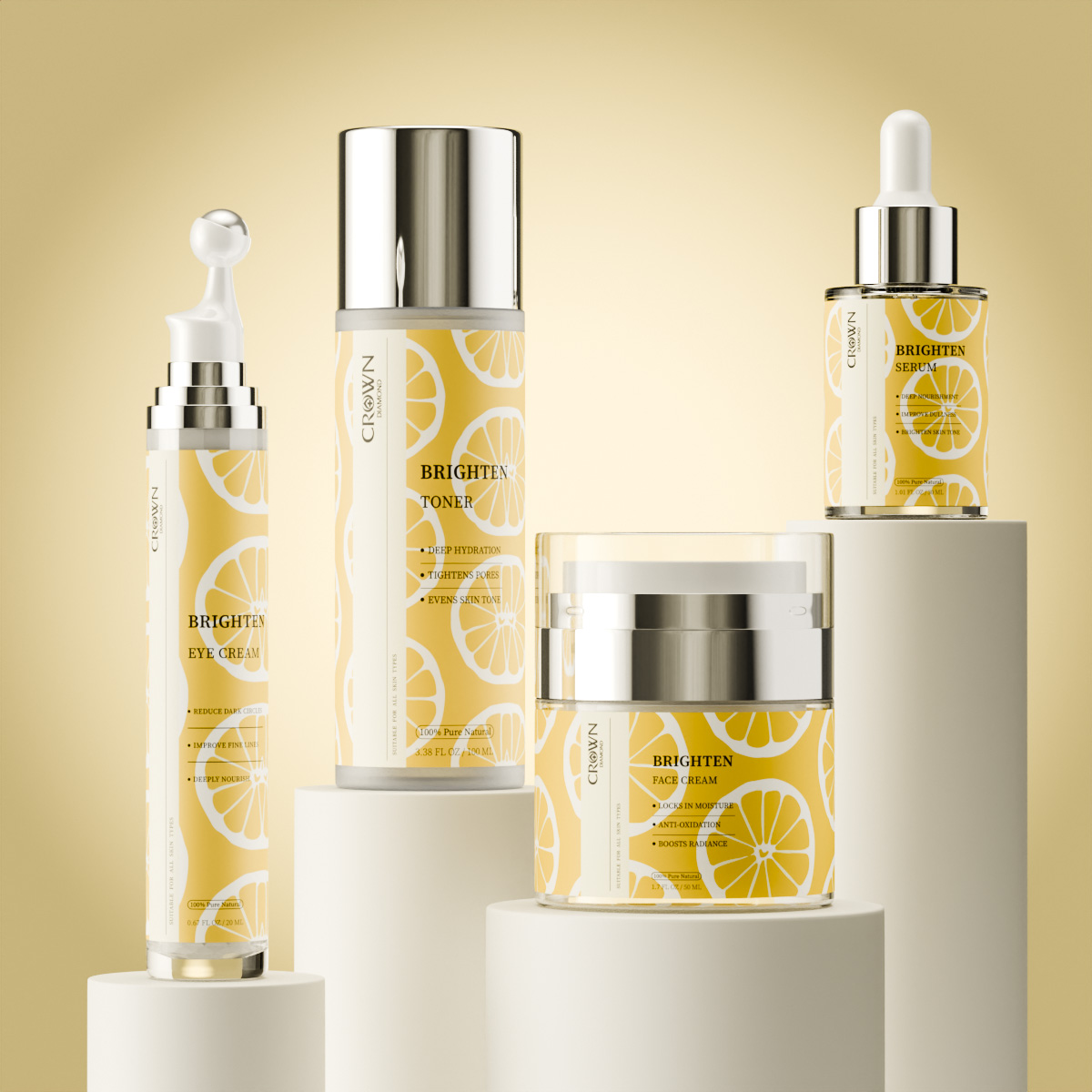
CrownDiaBio is a Guangzhou-based skincare OEM/ODM and private label manufacturer with more than 20 years of experience. The company supports private label cosmetics, custom formulation, packaging coordination, sample development, and bulk production for facial care and body care products.
For brands planning skincare lines for Europe and USA, CrownDiaBio can help evaluate product categories, formula direction, texture requirements, packaging routes, MOQ planning, and compliance-safe claim wording. With around 300+ formula options, MOQ support from 100 units for selected projects, monthly capacity up to 660,000 units, and manufacturing support including GMP, ISO 22716, and SGS-related documentation, the team is positioned for B2B buyers who need flexibility and repeat-order capability.
If you are preparing a skincare line for Europe or USA, share your product category, target market, texture preference, packaging idea, and expected order quantity through the CrownDiaBio contact page. Our team can review suitable OEM/ODM solutions and recommend sample options based on your project.
FAQ: Skincare Product Development for Europe and USA
What is the first step in developing skincare products for EU and US markets?
The first step is to define the target market, sales channel, product role, texture direction, packaging route, and claim positioning. This helps the manufacturer recommend formulas that fit the project instead of sending random samples.
Is private label skincare suitable for a first launch?
Yes. Private label skincare can be suitable for first launches because it uses existing or semi-ready formulas, which can shorten sampling time and reduce development complexity. Buyers can still customize branding, packaging, and product presentation.
When should a brand choose ODM skincare development?
ODM is useful when a brand needs more adjustment in texture, fragrance, ingredient story, packaging combination, or product-line concept. It is often a good choice when the buyer wants more differentiation than a standard ready formula.
What skincare products work well for Europe and USA inquiries?
Facial kits, vitamin C serum, moisturizing cream, body lotion, body scrub, body cream, and anti-aging cosmetic sets can all support B2B inquiries when they are connected to a clear market plan and sales channel.
How can skincare claims stay safer for Western markets?
Use cosmetic-style wording such as “helps,” “supports,” “leaves skin feeling,” and “improves the appearance of.” Avoid medical-style wording, absolute promises, or claims that are not supported by the final formula and available documentation.
Focused on driving B2B inquiries for OEM/ODM partners.
Final Thoughts
For Europe and USA skincare brands, product development works best when the brief is clear, the product range is focused, and the OEM/ODM route matches the launch stage.
If you are planning a serum, facial kit, body lotion, body scrub, or broader skincare line, start with the market, then compare how each manufacturer handles texture, packaging, sampling, and compliance-safe claims.
Contact CrownDiaBio to discuss your skincare product development project for Europe or USA and request sample recommendations based on your market, texture, packaging, and MOQ needs.