White Label Skincare Guide
Cosmetic Care White Label: A Practical Launch Guide for B2B Beauty Brands
Learn how B2B beauty brands plan cosmetic care white label projects, from formula choice and MOQ to packaging, compliance, and OEM/ODM support.
For many beauty brands, wholesalers, salon groups, and distributors, a cosmetic care white label route is a practical way to launch skincare products without building a full R&D and manufacturing system from the beginning. Instead of starting with a completely custom formula, buyers can select an existing or semi-ready formula, adjust packaging direction, apply their own brand identity, and move toward market testing faster.
That speed is useful, but it does not mean the project should be treated casually. A white label skincare product still needs the right formula fit, packaging compatibility, compliant claims, MOQ planning, sample approval, and stable production support. If buyers only compare catalog pictures and unit price, they may miss the details that decide whether the product can sell smoothly and be reordered consistently.
This guide explains how B2B buyers can evaluate cosmetic care white label options before choosing a skincare manufacturer or placing the first order.
What Does White Label Mean in Skincare Manufacturing?
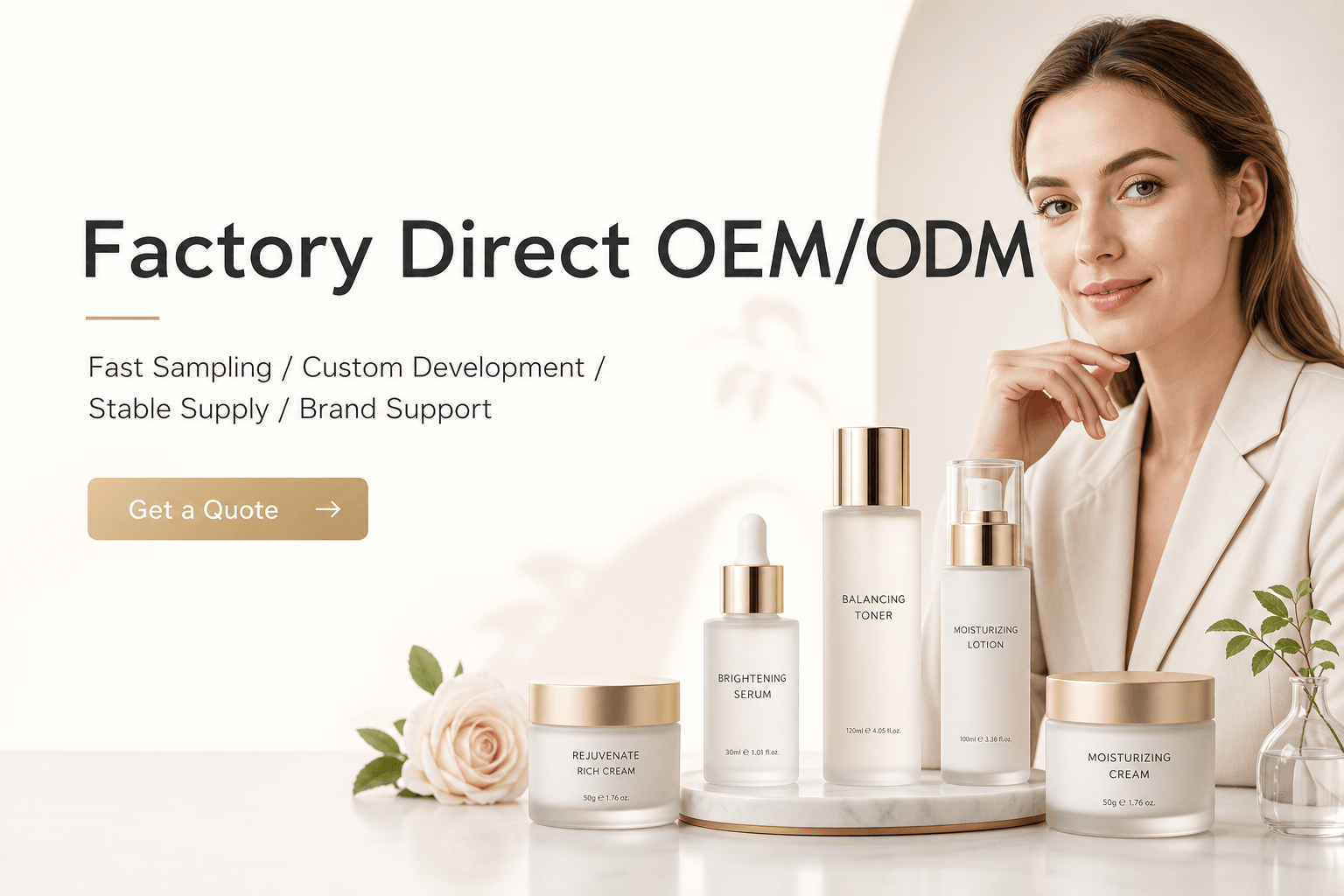
In B2B skincare, white label usually refers to ready-developed or semi-ready cosmetic products that can be branded and sold under the buyer’s own label. The buyer does not need to develop every formula from zero. Instead, the manufacturer provides existing formula options, packaging routes, filling support, labeling, and production services.
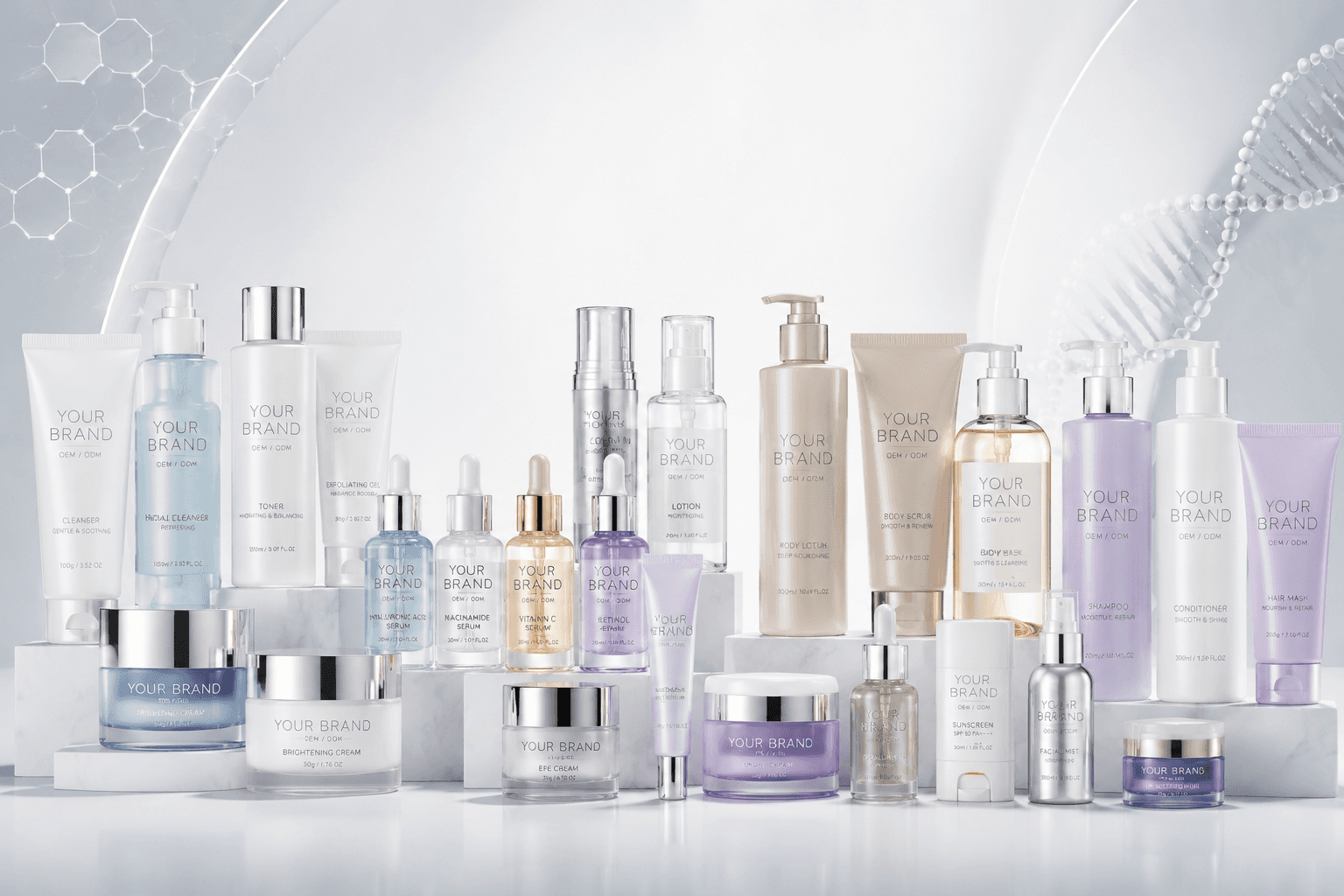
This model is especially useful for buyers who want to test a category, build a starter product line, or add new SKUs to an existing sales channel. Common white label cosmetic care products include facial serum, face cream, cleanser, toner, mask, body lotion, body cream, hand cream, body scrub, and complete skin care sets.
However, white label does not mean every decision is fixed. Depending on the manufacturer, buyers may still be able to adjust fragrance direction, texture preference, packaging style, label design, carton artwork, set combination, or later move into ODM customization after the first launch proves demand.

Why White Label Works for Faster Market Testing
Speed is one of the main reasons buyers choose this launch model. A new brand may not want to spend months on full formula development before it has proof of demand. A distributor may need a quick seasonal product line. A salon group may want retail products that support its service menu without carrying too much development risk.
White label manufacturing can shorten the path from product idea to sample review because the formula base already exists. This helps buyers focus on market positioning, packaging presentation, channel pricing, and MOQ planning earlier in the process.
The commercial value is not only speed. A good white label route also lets the buyer compare several product directions before committing to a wider launch. For example, a brand can start with a serum and cream combination, then expand into cleanser, mask, body lotion, or a facial care kit after sales feedback becomes clearer.
White Label vs Private Label vs ODM
These terms are often used together, but they are not exactly the same.
White label usually means the product is close to ready for branding. The manufacturer already has formula options and can support label and packaging execution. It is suitable when buyers need faster launch timing, lower development complexity, and a more predictable sampling process.
Private label is often used more broadly. It can include white label products, but it may also involve more packaging choices, formula adjustments, brand-specific product-line planning, and flexible SKU combinations.
ODM goes further into product development. In an ODM skincare project, the manufacturer helps create or modify the product concept based on the buyer’s target market, texture requirements, ingredient direction, packaging plan, and price positioning. ODM may be better when the buyer needs a more differentiated product or a stronger brand story.
If your team is still deciding which model fits your launch plan, the comparison in Custom Skincare vs Private Label can help clarify the decision before supplier screening.
Key Product Categories for White Label Skincare Projects
The best category depends on the buyer’s channel and customer base. For B2B buyers, the safest choice is usually not the trendiest product. It is the product that fits the sales channel, repeat-order potential, and packaging budget.
Facial care products are common starting points because they are easy to build into routines. A buyer may launch a cleanser, toner, serum, cream, and mask set, or begin with one hero product such as niacinamide serum, vitamin C serum, moisturizer, or brightening-positioned face cream. These categories work well for eCommerce brands, retail distributors, and salon retail programs.
Body care is also a strong route for white label development. Body lotion, body cream, hand cream, body scrub, and body care sets can support wider usage occasions and giftable packaging formats. For buyers focused on body care, existing articles on whitening body lotions and private label coconut body scrub may be useful references.
Skin care sets can help buyers create a more complete brand impression, but they require better coordination. Formula textures, fragrance style, packaging color, carton design, and routine logic should feel connected instead of assembled from random catalog items.
What B2B Buyers Should Check Before Choosing a White Label Supplier
A cosmetic care white label supplier should be evaluated as a manufacturing partner, not only as a product catalog source. The following checks help reduce avoidable launch risk.
1. Formula Fit for the Target Market
Start by asking whether the available formula matches your market direction. A lightweight gel cream may work for humid climates or younger consumers, while a richer cream may fit dry-skin or premium-care positioning. A body lotion for supermarket-style retail may need a different texture and fragrance profile than a spa or salon product.
The supplier should be able to explain formula differences in practical terms: texture, skin feel, absorption, fragrance direction, product category fit, and packaging suitability. If every option is described as a best seller without clear positioning, the buyer has little useful information for decision-making.
2. Packaging Compatibility and Brand Presentation
Packaging is not only decoration. It affects filling, product protection, user experience, shipping, shelf appearance, and perceived value. A serum may need a bottle, pump, or dropper format. A cream may use a jar, tube, or airless pump. A body lotion may require bottle stability and pump compatibility.
Before approving a white label project, ask which packaging options are already compatible with the formula and which options require extra testing or MOQ changes. Buyers should also confirm label size, carton options, artwork requirements, and whether the final packaging supports the intended sales channel.
3. MOQ, Lead Time, and Reorder Planning
MOQ can decide whether a white label project is commercially realistic. A low sample cost does not help if the required bulk order is too high for the buyer’s first launch.
Ask the supplier to separate formula MOQ, packaging MOQ, label MOQ, carton requirements, and any minimums for custom components. For test launches, buyers should also discuss reorder timing. If the product performs well, can the factory support repeat production with stable lead time and consistent communication?
Clear MOQ discussion protects cash flow and prevents surprises after sample approval.
4. Compliance-Safe Claims and Label Support
White label cosmetic products should avoid exaggerated language. Claims should stay within cosmetic positioning, such as helping skin feel moisturized, supporting a smoother-looking appearance, improving the feel of dryness, or fitting a daily care routine. Avoid medical-style wording, absolute promises, or clinical treatment-style claims.
This is important because many buyers need product descriptions, label copy, website content, and marketplace copy after production. A supplier that understands compliance-safe communication can help reduce later rewriting and positioning risk.
5. Sampling Process and Revision Communication
Sampling is where buyers can see how the supplier works before committing to bulk production. A good supplier asks about the target channel, preferred texture, fragrance direction, packaging plan, budget level, and launch timeline. It should also record feedback clearly if the buyer wants a lighter texture, different scent direction, or adjusted packaging option.
Do not judge the sample only by first impression. Use the sampling process to test communication quality, project discipline, and whether the factory can translate your feedback into practical next steps.

Red Flags in White Label Skincare Projects
Be cautious if a supplier:
- Cannot explain the difference between formula options
- Uses exaggerated efficacy or medical-style product claims
- Pushes bulk orders before sample confirmation
- Gives unclear answers on MOQ, lead time, or packaging requirements
- Treats all packaging as interchangeable without compatibility discussion
- Has no clear process for label, carton, or artwork confirmation
- Cannot support future line extension if the first product performs well
These signs do not always mean the supplier is impossible to work with, but they do mean the buyer should slow down and request clearer information before placing an order.
How CrownDiaBio Supports White Label Skincare Buyers
CrownDiaBio is a Guangzhou-based skincare manufacturer with more than 20 years of experience supporting OEM, ODM, private label, white label, and custom formulation projects for B2B beauty customers. The company supports facial care and body care categories, including serums, creams, cleansers, masks, facial kits, body lotions, body creams, and body care products.
For white label skincare projects, CrownDiaBio can help buyers review formula direction, sample options, packaging coordination, MOQ planning, and product-line expansion. With around 300+ formula options, MOQ from 100 units for selected projects, monthly production capacity up to 660,000 units, and GMP, ISO 22716, and SGS-related support, the company is positioned to support both test launches and scalable repeat orders.
If you are still comparing supplier types, you may also find How to Choose a Reliable Skincare Private Label Manufacturer useful before starting sample requests.
Final Thoughts
A white label skincare project can help beauty brands move faster, but it should still be managed with serious B2B discipline. The right supplier is not simply the one with the most catalog products or the lowest first quote. It is the one that can match formula fit, packaging compatibility, MOQ structure, compliant communication, sampling discipline, and future production support to your actual market plan.
If you are planning a white label skincare line, start with a clear product brief and compare how each manufacturer handles formula recommendation, packaging, MOQ, samples, and reorder planning.
To discuss your cosmetic care white label project, packaging direction, and sample needs, visit the Contact Us page or start from the CrownDiaBio homepage.
FAQ
Is white label skincare suitable for new beauty brands?
Yes. White label skincare can be suitable for new beauty brands because it reduces formula-development complexity and helps buyers test market demand faster. The key is to choose formulas and packaging that fit the target channel instead of copying random catalog products.
Can white label skincare products still use custom packaging?
In many projects, yes. Buyers can often apply their own label, carton, logo, color direction, and packaging style. However, MOQ and lead time may change when custom bottles, pumps, jars, boxes, or special components are involved.
What is the difference between white label and ODM skincare?
White label usually starts from existing or semi-ready formulas, while ODM involves more product concept development and formula adjustment. White label is often faster; ODM can provide more differentiation when the buyer needs a more customized product line.
What should buyers prepare before requesting white label samples?
Buyers should prepare product category, target market, sales channel, preferred texture, packaging direction, budget range, MOQ expectation, and launch timeline. A clear brief helps the manufacturer recommend better formula and packaging options.