Private Label vs Custom Skincare
Custom Skincare vs Private Label: Which Model Fits Your Brand Better?
Compare custom skincare and private label models for B2B beauty brands, including MOQ, lead time, cost, formulation flexibility, and launch strategy.
For beauty brands, distributors, salon groups, and e-commerce sellers, choosing between custom skincare and private label is an early decision that affects product positioning, launch speed, budget, and long-term brand differentiation. Both models can work well in B2B skincare manufacturing, but they are designed for different business goals.
Some buyers want to launch quickly with lower development complexity. Others want more control over texture, ingredient direction, routine logic, or brand story. The right choice depends on what stage your brand is in, how much customization you need, and how much time and coordination you can invest before launch.
This guide compares custom skincare and private label from a practical B2B perspective so you can decide which model fits your brand better.
What Is Private Label Skincare?
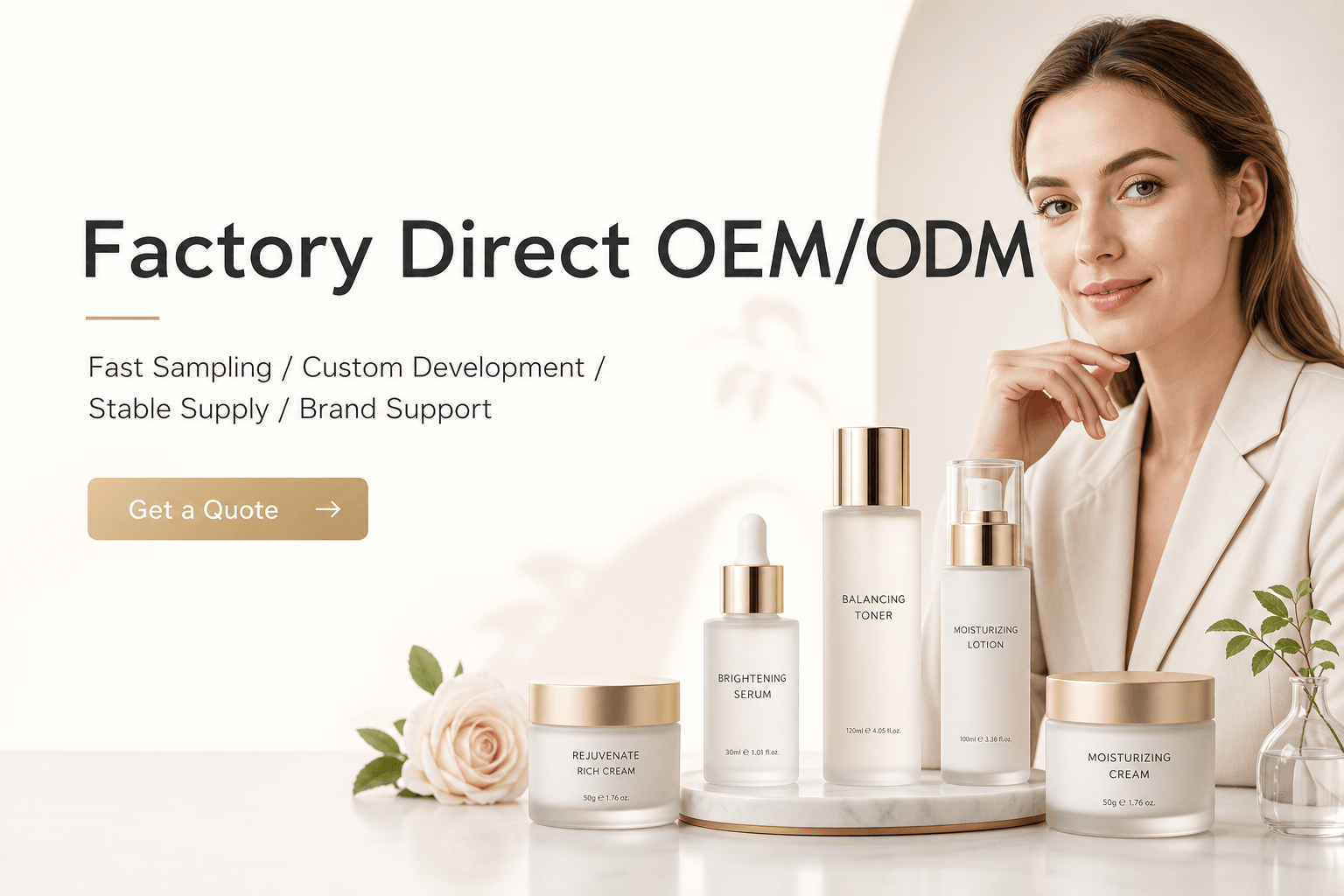
Private label skincare usually means choosing an existing or semi-developed formula from a manufacturer’s catalog and selling it under your own brand. The buyer typically customizes brand identity elements such as label design, packaging combination, outer box style, and product line presentation, while the core formula structure is already available.
This model is often used by startups, test-market buyers, salon brands, distributors, and e-commerce sellers that want to reduce development time and enter the market faster. In many cases, private label is the most practical way to build a first skincare line because it lowers technical complexity and makes sampling more straightforward.
For example, a buyer may select an existing cleanser, serum, cream, and body lotion, then build them into a coordinated private label range with a unified packaging direction. The manufacturer can help match formula options, container formats, and production planning without requiring the buyer to build every product from zero.
What Is Custom Skincare?
Custom skincare means the product is developed or adjusted according to the buyer’s more specific requirements. This may involve texture changes, fragrance direction, active ingredient positioning, packaging compatibility, target-skin-use scenarios, or a more tailored product concept for a defined market.
Custom skincare does not always mean inventing a formula completely from the beginning. In many B2B projects, it means modifying a base formula or developing around a benchmark direction so the final product better matches the brand’s positioning. The goal is not customization for its own sake. The goal is to create a product that feels more differentiated, more market-aligned, or more consistent with the brand story.
This model is often more suitable for brands that already understand their audience, want clearer product distinction, or need a more specific formulation direction than standard private label options can offer.
Launch Speed: Which Model Gets You to Market Faster?
For most buyers, private label is faster.
Because the formula base already exists, the manufacturer can usually move more quickly into sampling, packaging matching, label preparation, and production planning. There are fewer development variables to confirm, which makes the process easier for brands that want to launch a small skincare line without a long formulation stage.
Custom skincare usually takes more time because more decisions need to be made and confirmed. If you want to adjust texture, scent profile, ingredient direction, skin feel, or product positioning, the manufacturer may need more sample rounds and more technical discussion before the formula is finalized.
If your main business priority is speed to market, private label is often the better fit. If your priority is product distinction and more tailored positioning, custom skincare may justify the longer timeline.
MOQ and Budget: Which Model Is Easier for New Brands?
Private label is usually easier for lower-risk entry.
Many manufacturers can offer lower MOQ for selected private label projects because the formula, process, and component compatibility are already more standardized. This helps new brands test a market without creating too much inventory pressure at the beginning.
Custom skincare may involve higher development cost, more sampling work, and in some cases higher MOQ depending on the formula complexity, packaging choice, and sourcing requirements. Even when the MOQ itself is manageable, the total project cost may still be higher because more work happens before bulk production starts.
That does not mean custom skincare is only for large companies. It means buyers should be realistic about budget allocation. If your brand is still validating product-market fit, private label may protect cash flow better. If your brand already has a clear niche and stronger pricing power, custom skincare may create better long-term value.
Brand Differentiation: Which Model Gives You More Control?
This is where custom skincare has a stronger advantage.
Private label can still support branding through packaging, line structure, naming, and marketing presentation. But if multiple buyers are working from similar formula bases, the room for true product distinction may be narrower. That is not always a problem. For some businesses, speed, stability, and commercial practicality matter more than deep formulation uniqueness.
Custom skincare gives the brand more control over how the product feels and how it is positioned. A brand may want a lighter lotion for humid climates, a richer cream for dry-skin markets, a facial routine built around barrier support, or a product line with a more distinctive sensory profile. Those details can make a meaningful difference in how the range is received by distributors, salons, or end customers.
If your brand story depends on a more specific product identity, custom skincare is usually the better route.
Formula Flexibility and Product Strategy
Private label works well when your product strategy is clear and relatively standard. Common categories such as cleansers, serums, creams, masks, facial kits, and body lotions are often good fits for private label because the manufacturer may already have proven structures that are easier to sample and launch.
Custom skincare is more suitable when your strategy depends on specific product logic. You may want a coordinated system with a defined texture ladder, a product concept adapted to one region, or a routine designed for a channel such as salon treatment support, spa retail, or premium e-commerce positioning.
In practical terms, the question is not whether custom skincare is more advanced. The real question is whether your business actually needs the extra flexibility. If not, private label may be the more efficient model.
Operational Complexity: What Will the Buyer Need to Manage?
Private label is usually easier to manage.
The buyer still needs to confirm packaging, label artwork, line structure, MOQ, lead time, and sample approval. But the project is typically more straightforward because the formulation path is already clearer.
Custom skincare requires more communication discipline. The buyer should be ready to provide a stronger brief, evaluate samples more carefully, explain target market preferences, and align product direction with price positioning and channel strategy. If internal decision-making is slow or unclear, custom development can become inefficient.
A brand that chooses custom skincare should have a clear reason for doing so. More flexibility is only useful when the buyer can make good use of it.
Which Model Fits Different Types of Buyers?
Private label may be a better fit if you:
- Want to launch faster
- Need lower-risk market testing
- Prefer a more manageable MOQ structure
- Are building your first skincare line
- Need a practical solution for wholesale, salon, or distributor sales
Custom skincare may be a better fit if you:
- Already know your target customer well
- Need stronger formula or texture differentiation
- Want a more brand-specific product concept
- Can invest more time into product development
- Plan to build long-term brand distinction instead of only fast market entry
A Practical Middle Path: Start With Private Label, Then Move Into Custom Skincare
For many B2B buyers, the smartest approach is not choosing one model forever. It is choosing the right model for the current stage of the business.
A brand may start with private label to enter the market quickly, test category demand, and learn which products gain traction. After validating the market, the same brand can move selected best sellers into custom skincare development to improve differentiation, adjust texture, refine positioning, or upgrade the full routine.
This staged approach often reduces risk while still creating room for stronger brand identity over time. It is especially useful for growing brands that want to balance launch efficiency with long-term product development.
How CrownDiaBio Supports Both Models
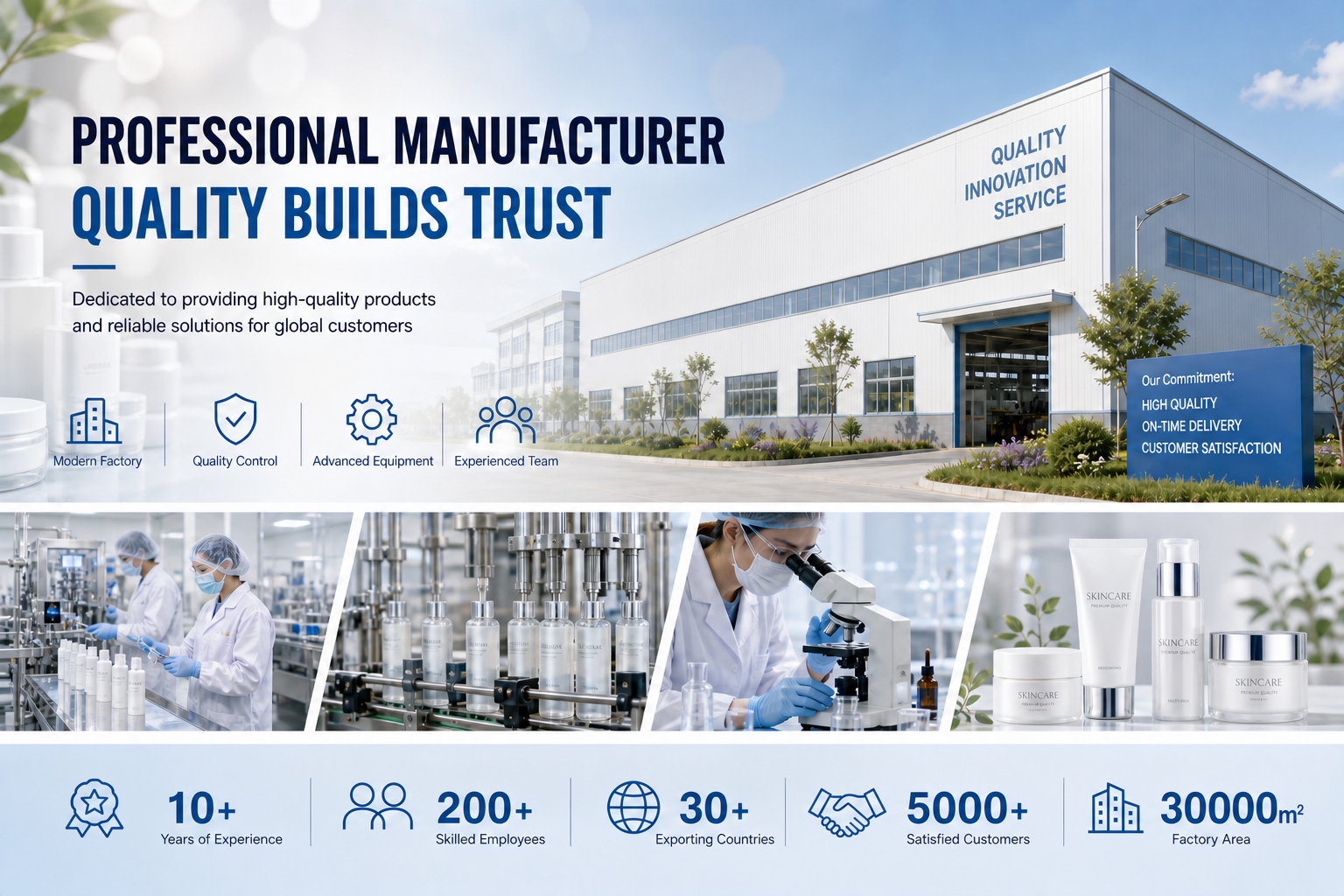
CrownDiaBio is a Guangzhou-based skincare manufacturer with more than 20 years of experience in OEM, ODM, private label, and custom formulation projects. The company supports B2B customers with formula selection, sample development, packaging coordination, production, and quality-related documentation.
For buyers focused on facial kits, serums, creams, masks, body lotion, and body care categories, CrownDiaBio offers around 300+ formula options, MOQ from 100 units for selected private label projects, monthly capacity up to 660,000 units, and GMP, ISO 22716, and SGS-related support. This makes it possible to support both faster-launch private label projects and more tailored custom skincare development.
If a buyer is not sure which route to choose, the practical starting point is to compare business priorities first: speed, budget, product distinction, target market, and expected order scale.
For a related supplier-evaluation article, read How to Choose a Reliable Skincare Private Label Manufacturer. If you are exploring complete routine planning, you can also read skin-care-set for a product-line perspective.
Final Thoughts
Custom skincare and private label are not competing because one is always better than the other. They serve different business needs.
Private label is usually better for faster launch, lower complexity, and more controlled early-stage investment. Custom skincare is usually better for brands that need stronger product distinction, more formulation flexibility, and a clearer long-term identity in the market.
If you are planning a new skincare line, the best choice is the model that matches your current business stage, not the model that sounds more advanced.
Contact CrownDiaBio to discuss whether private label or custom skincare is the better fit for your brand, and request formula options or samples based on your target market and launch plan.
—